Despite its small size, Sri Lanka is home to an extraordinary concentration of endemic species, making it one of the most important biodiversity hotspots in Asia.
From rainforests and cloud forests to dry-zone wilderness, wetlands, and coastal ecosystems, the island supports an exceptional diversity of wildlife and habitats. On this map, you will find many of Sri Lanka's most important national parks, nature reserves, and wildlife areas, including destinations featured in our tour packages.
Our expeditions go beyond checklists and photo ops. We collaborate with field biologists, local communities, and conservationists to offer travel that’s immersive, ethical, and unforgettable.
This isn’t about seeing more. It’s about feeling more — and leaving with stories worth retelling.


Explore our destinations
Where We Go | Across Sri Lanka
Where We Go | Across Sri Lanka
These are places we know, enjoy and keep returning to. Some are famous for good reason, while others offer a quieter and very different experience. What they have in common is that each adds something worthwhile to a journey through Sri Lanka, whether it's the wildlife, the landscape, the history or simply the experience of being there.
These are places we know, enjoy and keep returning to. Some are famous for good reason, while others offer a quieter and very different experience. What they have in common is that each adds something worthwhile to a journey through Sri Lanka, whether it's the wildlife, the landscape, the history or simply the experience of being there.

Yala, sri lanka
Yala National Park
| The Land of Leopards
Overview:
Located on Sri Lanka's southeastern coast, Yala National Park is the country's most visited and second-largest national park, covering nearly 980 square kilometres. The park contains dry monsoon forest, thorn scrub, open grasslands, rocky outcrops, freshwater lakes, and coastal lagoons. This range of habitats supports more than 40 mammal species and over 200 bird species. Yala is divided into five blocks, although only selected areas are generally open to visitors. Block 1 is the most frequently visited and is known for its network of waterholes, rocky terrain, and productive wildlife-viewing routes. Alongside leopards, safaris may produce elephants, sloth bears, deer, wild boar, crocodiles, jackals, and a wide variety of resident and migratory birds.
Why It Matters
Yala is internationally recognised for supporting the highest recorded leopard density in the world, making it one of the best places to see wild leopards. Beyond its big cats, the park provides important habitat for Asian elephants, sloth bears, mugger crocodiles, and many bird species. Established as a national park in 1938, Yala is also one of Sri Lanka's oldest protected areas. Its conservation value comes from the variety of ecosystems it protects, from inland dry-zone forest to wetlands and an important stretch of southeastern coastline.
Yala, sri lanka
Yala National Park
| The Land of Leopards
Overview:
Located on Sri Lanka's southeastern coast, Yala National Park is the country's most visited and second-largest national park, covering nearly 980 square kilometres. The park contains dry monsoon forest, thorn scrub, open grasslands, rocky outcrops, freshwater lakes, and coastal lagoons. This range of habitats supports more than 40 mammal species and over 200 bird species. Yala is divided into five blocks, although only selected areas are generally open to visitors. Block 1 is the most frequently visited and is known for its network of waterholes, rocky terrain, and productive wildlife-viewing routes. Alongside leopards, safaris may produce elephants, sloth bears, deer, wild boar, crocodiles, jackals, and a wide variety of resident and migratory birds.
Why It Matters
Yala is internationally recognised for supporting the highest recorded leopard density in the world, making it one of the best places to see wild leopards. Beyond its big cats, the park provides important habitat for Asian elephants, sloth bears, mugger crocodiles, and many bird species. Established as a national park in 1938, Yala is also one of Sri Lanka's oldest protected areas. Its conservation value comes from the variety of ecosystems it protects, from inland dry-zone forest to wetlands and an important stretch of southeastern coastline.
Yala, sri lanka
Yala National Park
| The Land of Leopards
Overview:
Located on Sri Lanka's southeastern coast, Yala National Park is the country's most visited and second-largest national park, covering nearly 980 square kilometres. The park contains dry monsoon forest, thorn scrub, open grasslands, rocky outcrops, freshwater lakes, and coastal lagoons. This range of habitats supports more than 40 mammal species and over 200 bird species. Yala is divided into five blocks, although only selected areas are generally open to visitors. Block 1 is the most frequently visited and is known for its network of waterholes, rocky terrain, and productive wildlife-viewing routes. Alongside leopards, safaris may produce elephants, sloth bears, deer, wild boar, crocodiles, jackals, and a wide variety of resident and migratory birds.
Why It Matters
Yala is internationally recognised for supporting the highest recorded leopard density in the world, making it one of the best places to see wild leopards. Beyond its big cats, the park provides important habitat for Asian elephants, sloth bears, mugger crocodiles, and many bird species. Established as a national park in 1938, Yala is also one of Sri Lanka's oldest protected areas. Its conservation value comes from the variety of ecosystems it protects, from inland dry-zone forest to wetlands and an important stretch of southeastern coastline.
Yala, sri lanka
Yala National Park
| The Land of Leopards
Overview:
Located on Sri Lanka's southeastern coast, Yala National Park is the country's most visited and second-largest national park, covering nearly 980 square kilometres. The park contains dry monsoon forest, thorn scrub, open grasslands, rocky outcrops, freshwater lakes, and coastal lagoons. This range of habitats supports more than 40 mammal species and over 200 bird species. Yala is divided into five blocks, although only selected areas are generally open to visitors. Block 1 is the most frequently visited and is known for its network of waterholes, rocky terrain, and productive wildlife-viewing routes. Alongside leopards, safaris may produce elephants, sloth bears, deer, wild boar, crocodiles, jackals, and a wide variety of resident and migratory birds.
Why It Matters
Yala is internationally recognised for supporting the highest recorded leopard density in the world, making it one of the best places to see wild leopards. Beyond its big cats, the park provides important habitat for Asian elephants, sloth bears, mugger crocodiles, and many bird species. Established as a national park in 1938, Yala is also one of Sri Lanka's oldest protected areas. Its conservation value comes from the variety of ecosystems it protects, from inland dry-zone forest to wetlands and an important stretch of southeastern coastline.
Wilpattu, sri lanka
Wilpattu National Park
| Sri Lanka's Wildest Frontier
Overview:
Wilpattu National Park is Sri Lanka's largest national park, covering more than 1,300 square kilometres in the island's north-west. Its defining feature is a network of natural, rain-fed depressions known as villus. These open wetlands are surrounded by forest and grass, creating productive areas for wildlife viewing, especially during dry periods. The landscape is generally more heavily wooded than Yala, and sightings often develop slowly as animals move between forest cover and the edges of the villus. Leopards are the main attraction, and Wilpattu is home to Sri Lanka's largest leopard population. The park also supports sloth bears, elephants, spotted deer, sambar, wild boar, crocodiles, and many species of birds. Wilpattu's size and lower visitor density give it a quieter and more spacious atmosphere than many other safari parks.
Why It Matters
Wilpattu protects one of the largest continuous areas of dry-zone wilderness in Sri Lanka. Its villu system creates a distinctive ecological pattern, providing water, feeding areas, and open ground within extensive forest. The park is an important stronghold for leopards and sloth bears, while its riverine and forest habitats support several endemic birds. Because much of Wilpattu remains relatively remote, it also provides space for wildlife away from heavily used tourist routes. Its value lies as much in the scale of the protected landscape as in any individual sighting.
Wilpattu, sri lanka
Wilpattu National Park
| Sri Lanka's Wildest Frontier
Overview:
Wilpattu National Park is Sri Lanka's largest national park, covering more than 1,300 square kilometres in the island's north-west. Its defining feature is a network of natural, rain-fed depressions known as villus. These open wetlands are surrounded by forest and grass, creating productive areas for wildlife viewing, especially during dry periods. The landscape is generally more heavily wooded than Yala, and sightings often develop slowly as animals move between forest cover and the edges of the villus. Leopards are the main attraction, and Wilpattu is home to Sri Lanka's largest leopard population. The park also supports sloth bears, elephants, spotted deer, sambar, wild boar, crocodiles, and many species of birds. Wilpattu's size and lower visitor density give it a quieter and more spacious atmosphere than many other safari parks.
Why It Matters
Wilpattu protects one of the largest continuous areas of dry-zone wilderness in Sri Lanka. Its villu system creates a distinctive ecological pattern, providing water, feeding areas, and open ground within extensive forest. The park is an important stronghold for leopards and sloth bears, while its riverine and forest habitats support several endemic birds. Because much of Wilpattu remains relatively remote, it also provides space for wildlife away from heavily used tourist routes. Its value lies as much in the scale of the protected landscape as in any individual sighting.
Wilpattu, sri lanka
Wilpattu National Park
| Sri Lanka's Wildest Frontier
Overview:
Wilpattu National Park is Sri Lanka's largest national park, covering more than 1,300 square kilometres in the island's north-west. Its defining feature is a network of natural, rain-fed depressions known as villus. These open wetlands are surrounded by forest and grass, creating productive areas for wildlife viewing, especially during dry periods. The landscape is generally more heavily wooded than Yala, and sightings often develop slowly as animals move between forest cover and the edges of the villus. Leopards are the main attraction, and Wilpattu is home to Sri Lanka's largest leopard population. The park also supports sloth bears, elephants, spotted deer, sambar, wild boar, crocodiles, and many species of birds. Wilpattu's size and lower visitor density give it a quieter and more spacious atmosphere than many other safari parks.
Why It Matters
Wilpattu protects one of the largest continuous areas of dry-zone wilderness in Sri Lanka. Its villu system creates a distinctive ecological pattern, providing water, feeding areas, and open ground within extensive forest. The park is an important stronghold for leopards and sloth bears, while its riverine and forest habitats support several endemic birds. Because much of Wilpattu remains relatively remote, it also provides space for wildlife away from heavily used tourist routes. Its value lies as much in the scale of the protected landscape as in any individual sighting.
Wilpattu, sri lanka
Wilpattu National Park
| Sri Lanka's Wildest Frontier
Overview:
Wilpattu National Park is Sri Lanka's largest national park, covering more than 1,300 square kilometres in the island's north-west. Its defining feature is a network of natural, rain-fed depressions known as villus. These open wetlands are surrounded by forest and grass, creating productive areas for wildlife viewing, especially during dry periods. The landscape is generally more heavily wooded than Yala, and sightings often develop slowly as animals move between forest cover and the edges of the villus. Leopards are the main attraction, and Wilpattu is home to Sri Lanka's largest leopard population. The park also supports sloth bears, elephants, spotted deer, sambar, wild boar, crocodiles, and many species of birds. Wilpattu's size and lower visitor density give it a quieter and more spacious atmosphere than many other safari parks.
Why It Matters
Wilpattu protects one of the largest continuous areas of dry-zone wilderness in Sri Lanka. Its villu system creates a distinctive ecological pattern, providing water, feeding areas, and open ground within extensive forest. The park is an important stronghold for leopards and sloth bears, while its riverine and forest habitats support several endemic birds. Because much of Wilpattu remains relatively remote, it also provides space for wildlife away from heavily used tourist routes. Its value lies as much in the scale of the protected landscape as in any individual sighting.

Udawalawe, sri lanka
Udawalawe National Park
| Where the Elephants Gather
Overview:
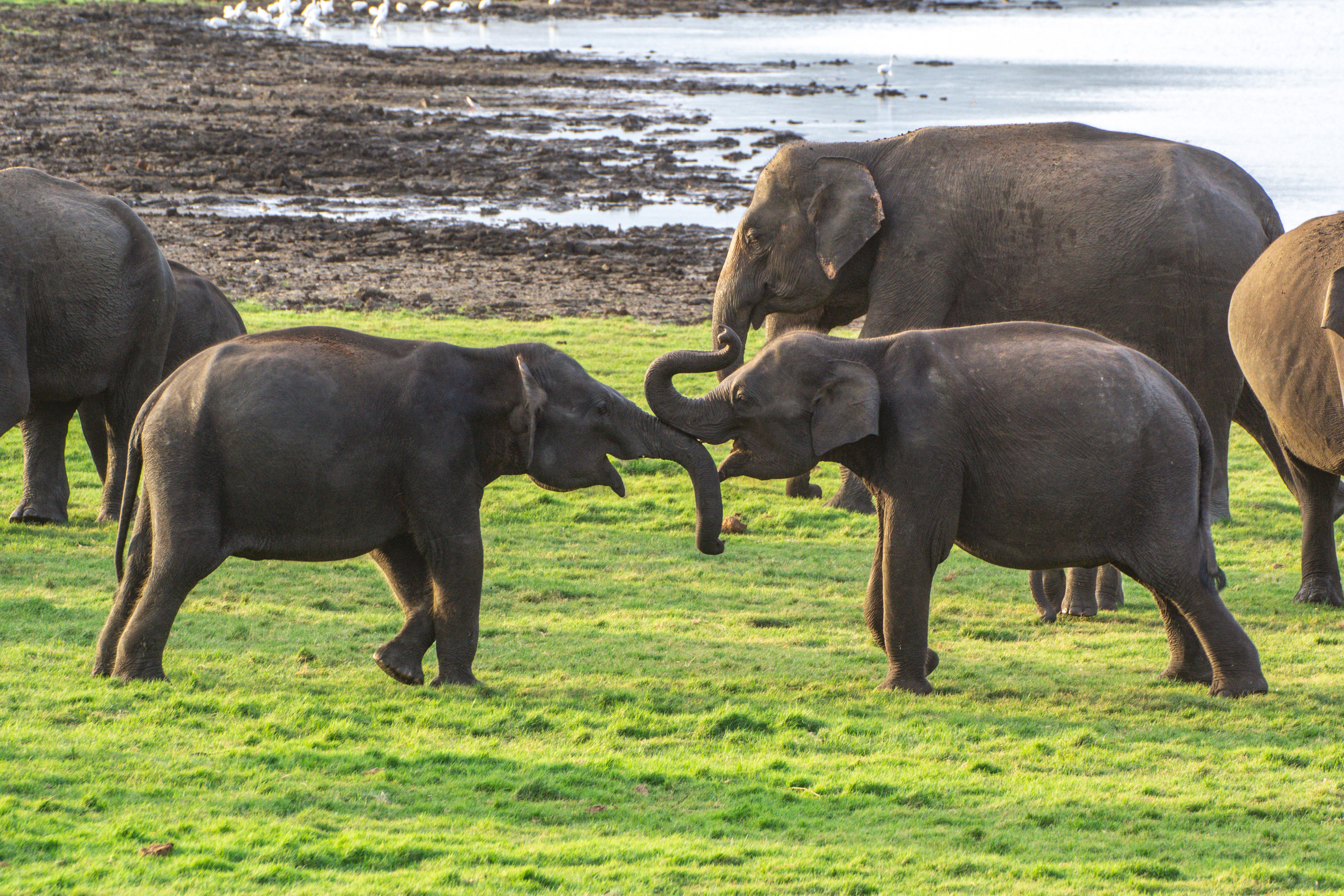
Udawalawe National Park lies between Sri Lanka's wet and dry zones and covers more than 300 square kilometres around the Udawalawe Reservoir. Much of the park consists of open grassland, scrub, and scattered forest, making wildlife easier to observe than in heavily wooded reserves. The reservoir and the Walawe River provide water throughout the year, attracting elephants and other animals even during dry periods. Udawalawe is best known for regular elephant sightings, but it also supports water buffalo, spotted deer, sambar, jackals, crocodiles, and a strong variety of birds. Raptors are a particular feature, with eagles, harriers, kites, and other birds of prey often seen over the open plains and around the reservoir.
Why It Matters
Udawalawe is one of Sri Lanka's most reliable places for observing wild Asian elephants in a natural setting. The park protects feeding grounds, water sources, and movement areas used by elephants. It also works in connection with the nearby Elephant Transit Home, where orphaned calves are cared for before being released back into the wild. Together, the park and rehabilitation programme play an important role in elephant conservation while allowing visitors to understand the species beyond a single safari sighting.
Udawalawe, sri lanka
Udawalawe National Park
| Where the Elephants Gather
Overview:
Udawalawe National Park lies between Sri Lanka's wet and dry zones and covers more than 300 square kilometres around the Udawalawe Reservoir. Much of the park consists of open grassland, scrub, and scattered forest, making wildlife easier to observe than in heavily wooded reserves. The reservoir and the Walawe River provide water throughout the year, attracting elephants and other animals even during dry periods. Udawalawe is best known for regular elephant sightings, but it also supports water buffalo, spotted deer, sambar, jackals, crocodiles, and a strong variety of birds. Raptors are a particular feature, with eagles, harriers, kites, and other birds of prey often seen over the open plains and around the reservoir.
Why It Matters
Udawalawe is one of Sri Lanka's most reliable places for observing wild Asian elephants in a natural setting. The park protects feeding grounds, water sources, and movement areas used by elephants. It also works in connection with the nearby Elephant Transit Home, where orphaned calves are cared for before being released back into the wild. Together, the park and rehabilitation programme play an important role in elephant conservation while allowing visitors to understand the species beyond a single safari sighting.
Udawalawe, sri lanka
Udawalawe National Park
| Where the Elephants Gather
Overview:
Udawalawe National Park lies between Sri Lanka's wet and dry zones and covers more than 300 square kilometres around the Udawalawe Reservoir. Much of the park consists of open grassland, scrub, and scattered forest, making wildlife easier to observe than in heavily wooded reserves. The reservoir and the Walawe River provide water throughout the year, attracting elephants and other animals even during dry periods. Udawalawe is best known for regular elephant sightings, but it also supports water buffalo, spotted deer, sambar, jackals, crocodiles, and a strong variety of birds. Raptors are a particular feature, with eagles, harriers, kites, and other birds of prey often seen over the open plains and around the reservoir.
Why It Matters
Udawalawe is one of Sri Lanka's most reliable places for observing wild Asian elephants in a natural setting. The park protects feeding grounds, water sources, and movement areas used by elephants. It also works in connection with the nearby Elephant Transit Home, where orphaned calves are cared for before being released back into the wild. Together, the park and rehabilitation programme play an important role in elephant conservation while allowing visitors to understand the species beyond a single safari sighting.
Udawalawe, sri lanka
Udawalawe National Park
| Where the Elephants Gather
Overview:
Udawalawe National Park lies between Sri Lanka's wet and dry zones and covers more than 300 square kilometres around the Udawalawe Reservoir. Much of the park consists of open grassland, scrub, and scattered forest, making wildlife easier to observe than in heavily wooded reserves. The reservoir and the Walawe River provide water throughout the year, attracting elephants and other animals even during dry periods. Udawalawe is best known for regular elephant sightings, but it also supports water buffalo, spotted deer, sambar, jackals, crocodiles, and a strong variety of birds. Raptors are a particular feature, with eagles, harriers, kites, and other birds of prey often seen over the open plains and around the reservoir.
Why It Matters
Udawalawe is one of Sri Lanka's most reliable places for observing wild Asian elephants in a natural setting. The park protects feeding grounds, water sources, and movement areas used by elephants. It also works in connection with the nearby Elephant Transit Home, where orphaned calves are cared for before being released back into the wild. Together, the park and rehabilitation programme play an important role in elephant conservation while allowing visitors to understand the species beyond a single safari sighting.

Bundala, sri lanka
Bundala National Park
| Sri Lanka's Wetland Gateway
Overview:
Located on Sri Lanka's southern coastline, Bundala National Park is the country's best-known wetland reserve and the first Sri Lankan site designated as a Ramsar Wetland of International Importance. Covering a little over 6,000 hectares, the park brings together shallow lagoons, salt pans, sand dunes, thorn scrub, and dry forest. These habitats support wildlife throughout the year, but Bundala is especially important for birds. During the northern winter, large numbers of migrants arrive from across Asia and Europe, joining resident waterbirds around the lagoons and mudflats. Storks, spoonbills, ibises, pelicans, terns, and many species of waders can also be recorded. Elephants, jackals, crocodiles, wild boar, and water buffalo are also found within the park.
Why It Matters
Bundala provides an essential feeding and resting area for birds moving along the Central Asian Flyway. Its mix of freshwater, brackish, and saline habitats allows many different species to use the park at the same time. Protecting these wetlands matters far beyond Sri Lanka, as migratory birds depend on a chain of safe sites across several countries. Bundala also protects an important section of the island's southern coastal landscape, where wetlands, dunes, scrub, and marine habitats meet.
Bundala, sri lanka
Bundala National Park
| Sri Lanka's Wetland Gateway
Overview:
Located on Sri Lanka's southern coastline, Bundala National Park is the country's best-known wetland reserve and the first Sri Lankan site designated as a Ramsar Wetland of International Importance. Covering a little over 6,000 hectares, the park brings together shallow lagoons, salt pans, sand dunes, thorn scrub, and dry forest. These habitats support wildlife throughout the year, but Bundala is especially important for birds. During the northern winter, large numbers of migrants arrive from across Asia and Europe, joining resident waterbirds around the lagoons and mudflats. Storks, spoonbills, ibises, pelicans, terns, and many species of waders can also be recorded. Elephants, jackals, crocodiles, wild boar, and water buffalo are also found within the park.
Why It Matters
Bundala provides an essential feeding and resting area for birds moving along the Central Asian Flyway. Its mix of freshwater, brackish, and saline habitats allows many different species to use the park at the same time. Protecting these wetlands matters far beyond Sri Lanka, as migratory birds depend on a chain of safe sites across several countries. Bundala also protects an important section of the island's southern coastal landscape, where wetlands, dunes, scrub, and marine habitats meet.
Bundala, sri lanka
Bundala National Park
| Sri Lanka's Wetland Gateway
Overview:
Located on Sri Lanka's southern coastline, Bundala National Park is the country's best-known wetland reserve and the first Sri Lankan site designated as a Ramsar Wetland of International Importance. Covering a little over 6,000 hectares, the park brings together shallow lagoons, salt pans, sand dunes, thorn scrub, and dry forest. These habitats support wildlife throughout the year, but Bundala is especially important for birds. During the northern winter, large numbers of migrants arrive from across Asia and Europe, joining resident waterbirds around the lagoons and mudflats. Storks, spoonbills, ibises, pelicans, terns, and many species of waders can also be recorded. Elephants, jackals, crocodiles, wild boar, and water buffalo are also found within the park.
Why It Matters
Bundala provides an essential feeding and resting area for birds moving along the Central Asian Flyway. Its mix of freshwater, brackish, and saline habitats allows many different species to use the park at the same time. Protecting these wetlands matters far beyond Sri Lanka, as migratory birds depend on a chain of safe sites across several countries. Bundala also protects an important section of the island's southern coastal landscape, where wetlands, dunes, scrub, and marine habitats meet.
Bundala, sri lanka
Bundala National Park
| Sri Lanka's Wetland Gateway
Overview:
Located on Sri Lanka's southern coastline, Bundala National Park is the country's best-known wetland reserve and the first Sri Lankan site designated as a Ramsar Wetland of International Importance. Covering a little over 6,000 hectares, the park brings together shallow lagoons, salt pans, sand dunes, thorn scrub, and dry forest. These habitats support wildlife throughout the year, but Bundala is especially important for birds. During the northern winter, large numbers of migrants arrive from across Asia and Europe, joining resident waterbirds around the lagoons and mudflats. Storks, spoonbills, ibises, pelicans, terns, and many species of waders can also be recorded. Elephants, jackals, crocodiles, wild boar, and water buffalo are also found within the park.
Why It Matters
Bundala provides an essential feeding and resting area for birds moving along the Central Asian Flyway. Its mix of freshwater, brackish, and saline habitats allows many different species to use the park at the same time. Protecting these wetlands matters far beyond Sri Lanka, as migratory birds depend on a chain of safe sites across several countries. Bundala also protects an important section of the island's southern coastal landscape, where wetlands, dunes, scrub, and marine habitats meet.

Horton Plains, sri lanka
Horton Plains National Park
| Sri Lanka's Highland Wilderness
Overview:
Horton Plains National Park lies more than 2,000 metres above sea level in Sri Lanka's central highlands. Covering just over 3,100 hectares, it protects a rare combination of cloud forest, montane grassland, streams, and marshes. The cool temperatures, frequent mist, and open rolling landscape are very different from the tropical lowlands. Visitors can explore the park on foot, following trails through grasslands and forest towards Baker's Falls and the well-known World's End escarpment. Sambar deer are often seen feeding in the open areas, while the forest patches support highland birds, mammals, reptiles, and amphibians adapted to the cooler climate. Early mornings usually offer the clearest views before cloud moves across the plateau.
Why It Matters
Horton Plains protects one of Sri Lanka's most restricted and fragile ecosystems. Several birds found here are closely associated with the central highlands, including the Yellow-eared Bulbul, Sri Lanka White-eye, Dull-blue Flycatcher, Sri Lanka Whistling Thrush, Sri Lanka Bush-warbler, and Ceylon Wood-pigeon. The plateau is also an important watershed and forms the headwaters of several major rivers. Its forests and grasslands therefore support wildlife while also helping supply water to communities and agricultural areas far beyond the park.
Horton Plains, sri lanka
Horton Plains National Park
| Sri Lanka's Highland Wilderness
Overview:
Horton Plains National Park lies more than 2,000 metres above sea level in Sri Lanka's central highlands. Covering just over 3,100 hectares, it protects a rare combination of cloud forest, montane grassland, streams, and marshes. The cool temperatures, frequent mist, and open rolling landscape are very different from the tropical lowlands. Visitors can explore the park on foot, following trails through grasslands and forest towards Baker's Falls and the well-known World's End escarpment. Sambar deer are often seen feeding in the open areas, while the forest patches support highland birds, mammals, reptiles, and amphibians adapted to the cooler climate. Early mornings usually offer the clearest views before cloud moves across the plateau.
Why It Matters
Horton Plains protects one of Sri Lanka's most restricted and fragile ecosystems. Several birds found here are closely associated with the central highlands, including the Yellow-eared Bulbul, Sri Lanka White-eye, Dull-blue Flycatcher, Sri Lanka Whistling Thrush, Sri Lanka Bush-warbler, and Ceylon Wood-pigeon. The plateau is also an important watershed and forms the headwaters of several major rivers. Its forests and grasslands therefore support wildlife while also helping supply water to communities and agricultural areas far beyond the park.
Horton Plains, sri lanka
Horton Plains National Park
| Sri Lanka's Highland Wilderness
Overview:
Horton Plains National Park lies more than 2,000 metres above sea level in Sri Lanka's central highlands. Covering just over 3,100 hectares, it protects a rare combination of cloud forest, montane grassland, streams, and marshes. The cool temperatures, frequent mist, and open rolling landscape are very different from the tropical lowlands. Visitors can explore the park on foot, following trails through grasslands and forest towards Baker's Falls and the well-known World's End escarpment. Sambar deer are often seen feeding in the open areas, while the forest patches support highland birds, mammals, reptiles, and amphibians adapted to the cooler climate. Early mornings usually offer the clearest views before cloud moves across the plateau.
Why It Matters
Horton Plains protects one of Sri Lanka's most restricted and fragile ecosystems. Several birds found here are closely associated with the central highlands, including the Yellow-eared Bulbul, Sri Lanka White-eye, Dull-blue Flycatcher, Sri Lanka Whistling Thrush, Sri Lanka Bush-warbler, and Ceylon Wood-pigeon. The plateau is also an important watershed and forms the headwaters of several major rivers. Its forests and grasslands therefore support wildlife while also helping supply water to communities and agricultural areas far beyond the park.
Horton Plains, sri lanka
Horton Plains National Park
| Sri Lanka's Highland Wilderness
Overview:
Horton Plains National Park lies more than 2,000 metres above sea level in Sri Lanka's central highlands. Covering just over 3,100 hectares, it protects a rare combination of cloud forest, montane grassland, streams, and marshes. The cool temperatures, frequent mist, and open rolling landscape are very different from the tropical lowlands. Visitors can explore the park on foot, following trails through grasslands and forest towards Baker's Falls and the well-known World's End escarpment. Sambar deer are often seen feeding in the open areas, while the forest patches support highland birds, mammals, reptiles, and amphibians adapted to the cooler climate. Early mornings usually offer the clearest views before cloud moves across the plateau.
Why It Matters
Horton Plains protects one of Sri Lanka's most restricted and fragile ecosystems. Several birds found here are closely associated with the central highlands, including the Yellow-eared Bulbul, Sri Lanka White-eye, Dull-blue Flycatcher, Sri Lanka Whistling Thrush, Sri Lanka Bush-warbler, and Ceylon Wood-pigeon. The plateau is also an important watershed and forms the headwaters of several major rivers. Its forests and grasslands therefore support wildlife while also helping supply water to communities and agricultural areas far beyond the park.

Sinharaja, sri lanka
Sinharaja Forest Reserve
| The Last Rainforest
Overview:
Sinharaja Forest Reserve lies in Sri Lanka's south-western wet zone and protects the island's largest remaining area of lowland tropical rainforest. Recognised as a UNESCO World Heritage Site, the reserve is characterised by high rainfall, dense vegetation, steep ridges, streams, and a layered forest canopy. The area is best explored on foot with a knowledgeable guide, as much of its wildlife is detected by sound, movement, tracks, or small details in the vegetation. Sinharaja is especially well known for its mixed-species feeding flocks, which move and feed through different levels of the forest, often led by the endemic Sri Lanka Crested Drongo. Within these flocks, canopy-level birds can create the characteristic movement known as a bird wave. These flocks may include endemic babblers, drongos, malkohas, nuthatches, flycatchers, and other birds, while reptiles, amphibians, butterflies, and invertebrates add to the forest's diversity.
Why It Matters
Sinharaja is one of the most important centres of endemism in Sri Lanka. Many of its plants and animals occur nowhere else, and several depend on intact rainforest habitat. The reserve protects a living ecosystem rather than a collection of individual species: trees, fungi, insects, birds, mammals, reptiles, and amphibians are closely connected. It also remains an important site for long-term field research, including studies of mixed-species bird flocks. Conserving Sinharaja is therefore essential for both Sri Lanka's biodiversity and the scientific understanding of tropical rainforest systems.
Sinharaja, sri lanka
Sinharaja Forest Reserve
| The Last Rainforest
Overview:
Sinharaja Forest Reserve lies in Sri Lanka's south-western wet zone and protects the island's largest remaining area of lowland tropical rainforest. Recognised as a UNESCO World Heritage Site, the reserve is characterised by high rainfall, dense vegetation, steep ridges, streams, and a layered forest canopy. The area is best explored on foot with a knowledgeable guide, as much of its wildlife is detected by sound, movement, tracks, or small details in the vegetation. Sinharaja is especially well known for its mixed-species feeding flocks, which move and feed through different levels of the forest, often led by the endemic Sri Lanka Crested Drongo. Within these flocks, canopy-level birds can create the characteristic movement known as a bird wave. These flocks may include endemic babblers, drongos, malkohas, nuthatches, flycatchers, and other birds, while reptiles, amphibians, butterflies, and invertebrates add to the forest's diversity.
Why It Matters
Sinharaja is one of the most important centres of endemism in Sri Lanka. Many of its plants and animals occur nowhere else, and several depend on intact rainforest habitat. The reserve protects a living ecosystem rather than a collection of individual species: trees, fungi, insects, birds, mammals, reptiles, and amphibians are closely connected. It also remains an important site for long-term field research, including studies of mixed-species bird flocks. Conserving Sinharaja is therefore essential for both Sri Lanka's biodiversity and the scientific understanding of tropical rainforest systems.
Sinharaja, sri lanka
Sinharaja Forest Reserve
| The Last Rainforest
Overview:
Sinharaja Forest Reserve lies in Sri Lanka's south-western wet zone and protects the island's largest remaining area of lowland tropical rainforest. Recognised as a UNESCO World Heritage Site, the reserve is characterised by high rainfall, dense vegetation, steep ridges, streams, and a layered forest canopy. The area is best explored on foot with a knowledgeable guide, as much of its wildlife is detected by sound, movement, tracks, or small details in the vegetation. Sinharaja is especially well known for its mixed-species feeding flocks, which move and feed through different levels of the forest, often led by the endemic Sri Lanka Crested Drongo. Within these flocks, canopy-level birds can create the characteristic movement known as a bird wave. These flocks may include endemic babblers, drongos, malkohas, nuthatches, flycatchers, and other birds, while reptiles, amphibians, butterflies, and invertebrates add to the forest's diversity.
Why It Matters
Sinharaja is one of the most important centres of endemism in Sri Lanka. Many of its plants and animals occur nowhere else, and several depend on intact rainforest habitat. The reserve protects a living ecosystem rather than a collection of individual species: trees, fungi, insects, birds, mammals, reptiles, and amphibians are closely connected. It also remains an important site for long-term field research, including studies of mixed-species bird flocks. Conserving Sinharaja is therefore essential for both Sri Lanka's biodiversity and the scientific understanding of tropical rainforest systems.
Sinharaja, sri lanka
Sinharaja Forest Reserve
| The Last Rainforest
Overview:
Sinharaja Forest Reserve lies in Sri Lanka's south-western wet zone and protects the island's largest remaining area of lowland tropical rainforest. Recognised as a UNESCO World Heritage Site, the reserve is characterised by high rainfall, dense vegetation, steep ridges, streams, and a layered forest canopy. The area is best explored on foot with a knowledgeable guide, as much of its wildlife is detected by sound, movement, tracks, or small details in the vegetation. Sinharaja is especially well known for its mixed-species feeding flocks, which move and feed through different levels of the forest, often led by the endemic Sri Lanka Crested Drongo. Within these flocks, canopy-level birds can create the characteristic movement known as a bird wave. These flocks may include endemic babblers, drongos, malkohas, nuthatches, flycatchers, and other birds, while reptiles, amphibians, butterflies, and invertebrates add to the forest's diversity.
Why It Matters
Sinharaja is one of the most important centres of endemism in Sri Lanka. Many of its plants and animals occur nowhere else, and several depend on intact rainforest habitat. The reserve protects a living ecosystem rather than a collection of individual species: trees, fungi, insects, birds, mammals, reptiles, and amphibians are closely connected. It also remains an important site for long-term field research, including studies of mixed-species bird flocks. Conserving Sinharaja is therefore essential for both Sri Lanka's biodiversity and the scientific understanding of tropical rainforest systems.
Minneriya, sri lanka
Minneriya National Park
| Home of The Gathering
Overview:
Minneriya National Park is located in Sri Lanka's North Central Province and is centred on the ancient Minneriya Tank, a reservoir constructed in the third century. The park covers close to 9,000 hectares and includes forest, scrub, wetlands, and seasonally exposed grasslands around the reservoir. During the dry season, falling water levels reveal fresh grazing areas that attract elephants from the wider region. This seasonal concentration, commonly called the Gathering, can bring large numbers of elephants into view, although their movements vary from year to year depending on rainfall and water conditions. The park also supports deer, monkeys, crocodiles, reptiles, butterflies, and a wide range of waterbirds and forest birds.
Why It Matters
Minneriya shows how an ancient human-made reservoir can become a major wildlife habitat. The tank continues to support agriculture while also providing water and grazing for animals during the dry season. The elephant concentration around Minneriya and Kaudulla Reservoirs is one of the most significant seasonal wildlife events in Sri Lanka, but it also highlights the need to protect movement routes between parks, forests, and water sources. The park's importance therefore extends beyond its boundaries and depends on the wider landscape remaining connected.
Minneriya, sri lanka
Minneriya National Park
| Home of The Gathering
Overview:
Minneriya National Park is located in Sri Lanka's North Central Province and is centred on the ancient Minneriya Tank, a reservoir constructed in the third century. The park covers close to 9,000 hectares and includes forest, scrub, wetlands, and seasonally exposed grasslands around the reservoir. During the dry season, falling water levels reveal fresh grazing areas that attract elephants from the wider region. This seasonal concentration, commonly called the Gathering, can bring large numbers of elephants into view, although their movements vary from year to year depending on rainfall and water conditions. The park also supports deer, monkeys, crocodiles, reptiles, butterflies, and a wide range of waterbirds and forest birds.
Why It Matters
Minneriya shows how an ancient human-made reservoir can become a major wildlife habitat. The tank continues to support agriculture while also providing water and grazing for animals during the dry season. The elephant concentration around Minneriya and Kaudulla Reservoirs is one of the most significant seasonal wildlife events in Sri Lanka, but it also highlights the need to protect movement routes between parks, forests, and water sources. The park's importance therefore extends beyond its boundaries and depends on the wider landscape remaining connected.
Minneriya, sri lanka
Minneriya National Park
| Home of The Gathering
Overview:
Minneriya National Park is located in Sri Lanka's North Central Province and is centred on the ancient Minneriya Tank, a reservoir constructed in the third century. The park covers close to 9,000 hectares and includes forest, scrub, wetlands, and seasonally exposed grasslands around the reservoir. During the dry season, falling water levels reveal fresh grazing areas that attract elephants from the wider region. This seasonal concentration, commonly called the Gathering, can bring large numbers of elephants into view, although their movements vary from year to year depending on rainfall and water conditions. The park also supports deer, monkeys, crocodiles, reptiles, butterflies, and a wide range of waterbirds and forest birds.
Why It Matters
Minneriya shows how an ancient human-made reservoir can become a major wildlife habitat. The tank continues to support agriculture while also providing water and grazing for animals during the dry season. The elephant concentration around Minneriya and Kaudulla Reservoirs is one of the most significant seasonal wildlife events in Sri Lanka, but it also highlights the need to protect movement routes between parks, forests, and water sources. The park's importance therefore extends beyond its boundaries and depends on the wider landscape remaining connected.
Minneriya, sri lanka
Minneriya National Park
| Home of The Gathering
Overview:
Minneriya National Park is located in Sri Lanka's North Central Province and is centred on the ancient Minneriya Tank, a reservoir constructed in the third century. The park covers close to 9,000 hectares and includes forest, scrub, wetlands, and seasonally exposed grasslands around the reservoir. During the dry season, falling water levels reveal fresh grazing areas that attract elephants from the wider region. This seasonal concentration, commonly called the Gathering, can bring large numbers of elephants into view, although their movements vary from year to year depending on rainfall and water conditions. The park also supports deer, monkeys, crocodiles, reptiles, butterflies, and a wide range of waterbirds and forest birds.
Why It Matters
Minneriya shows how an ancient human-made reservoir can become a major wildlife habitat. The tank continues to support agriculture while also providing water and grazing for animals during the dry season. The elephant concentration around Minneriya and Kaudulla Reservoirs is one of the most significant seasonal wildlife events in Sri Lanka, but it also highlights the need to protect movement routes between parks, forests, and water sources. The park's importance therefore extends beyond its boundaries and depends on the wider landscape remaining connected.

Knuckles, sri lanka
Pitawala Pathana
| Grasslands Among the Peaks
Overview:
The Knuckles Mountain Range rises in central Sri Lanka and takes its name from a series of peaks that resemble a clenched fist when viewed from certain angles. The range includes cloud forest, montane and sub-montane forest, grassland, river valleys, rocky slopes, and small villages. Pitawala Pathana is one of its best-known landscapes: an open grassland plateau reached by a scenic mountain road, with broad views across the surrounding ridges. Conditions can change quickly, with strong sun, mist, wind, and rain occurring within the same day. The area is explored mainly on foot, and the experience is shaped as much by the terrain, plants, streams, and changing weather as by individual wildlife sightings.
Why It Matters
The Knuckles Range forms part of Sri Lanka's Central Highlands UNESCO World Heritage Site and supports many species with very limited distributions. Its isolation, altitude changes, and varied habitats have allowed distinctive plants, amphibians, reptiles, birds, and freshwater species to develop. The range is also an important watershed, feeding rivers used by both wildlife and rural communities. Protecting Knuckles means conserving an entire mountain landscape where biodiversity, water, agriculture, and village life remain closely connected.
Knuckles, sri lanka
Pitawala Pathana
| Grasslands Among the Peaks
Overview:
The Knuckles Mountain Range rises in central Sri Lanka and takes its name from a series of peaks that resemble a clenched fist when viewed from certain angles. The range includes cloud forest, montane and sub-montane forest, grassland, river valleys, rocky slopes, and small villages. Pitawala Pathana is one of its best-known landscapes: an open grassland plateau reached by a scenic mountain road, with broad views across the surrounding ridges. Conditions can change quickly, with strong sun, mist, wind, and rain occurring within the same day. The area is explored mainly on foot, and the experience is shaped as much by the terrain, plants, streams, and changing weather as by individual wildlife sightings.
Why It Matters
The Knuckles Range forms part of Sri Lanka's Central Highlands UNESCO World Heritage Site and supports many species with very limited distributions. Its isolation, altitude changes, and varied habitats have allowed distinctive plants, amphibians, reptiles, birds, and freshwater species to develop. The range is also an important watershed, feeding rivers used by both wildlife and rural communities. Protecting Knuckles means conserving an entire mountain landscape where biodiversity, water, agriculture, and village life remain closely connected.
Knuckles, sri lanka
Pitawala Pathana
| Grasslands Among the Peaks
Overview:
The Knuckles Mountain Range rises in central Sri Lanka and takes its name from a series of peaks that resemble a clenched fist when viewed from certain angles. The range includes cloud forest, montane and sub-montane forest, grassland, river valleys, rocky slopes, and small villages. Pitawala Pathana is one of its best-known landscapes: an open grassland plateau reached by a scenic mountain road, with broad views across the surrounding ridges. Conditions can change quickly, with strong sun, mist, wind, and rain occurring within the same day. The area is explored mainly on foot, and the experience is shaped as much by the terrain, plants, streams, and changing weather as by individual wildlife sightings.
Why It Matters
The Knuckles Range forms part of Sri Lanka's Central Highlands UNESCO World Heritage Site and supports many species with very limited distributions. Its isolation, altitude changes, and varied habitats have allowed distinctive plants, amphibians, reptiles, birds, and freshwater species to develop. The range is also an important watershed, feeding rivers used by both wildlife and rural communities. Protecting Knuckles means conserving an entire mountain landscape where biodiversity, water, agriculture, and village life remain closely connected.
Knuckles, sri lanka
Pitawala Pathana
| Grasslands Among the Peaks
Overview:
The Knuckles Mountain Range rises in central Sri Lanka and takes its name from a series of peaks that resemble a clenched fist when viewed from certain angles. The range includes cloud forest, montane and sub-montane forest, grassland, river valleys, rocky slopes, and small villages. Pitawala Pathana is one of its best-known landscapes: an open grassland plateau reached by a scenic mountain road, with broad views across the surrounding ridges. Conditions can change quickly, with strong sun, mist, wind, and rain occurring within the same day. The area is explored mainly on foot, and the experience is shaped as much by the terrain, plants, streams, and changing weather as by individual wildlife sightings.
Why It Matters
The Knuckles Range forms part of Sri Lanka's Central Highlands UNESCO World Heritage Site and supports many species with very limited distributions. Its isolation, altitude changes, and varied habitats have allowed distinctive plants, amphibians, reptiles, birds, and freshwater species to develop. The range is also an important watershed, feeding rivers used by both wildlife and rural communities. Protecting Knuckles means conserving an entire mountain landscape where biodiversity, water, agriculture, and village life remain closely connected.

Wasgamuwa, sri lanka
Wasgamuwa National Park
| The Elephant Corridor
Overview:
Wasgamuwa National Park lies east of Sri Lanka's central highlands, between the Mahaweli and Amban river systems. Covering almost 40,000 hectares, it contains dry evergreen forest, riverine forest, grassland, scrub, rocky areas, and a network of tanks and streams. The park is less heavily visited than Yala, Udawalawe, or Minneriya, giving safaris a quieter character. Wasgamuwa is known for elephants, which may be seen alone or in groups near grasslands and water, while buffalo, deer, monkeys, crocodiles, and wild boar are also present. Its varied habitats support a broad range of birds, including raptors, forest species, waterbirds, and several Sri Lankan endemics.
Why It Matters
Wasgamuwa protects an important section of the central dry zone and provides habitat for elephants moving through the wider Mahaweli landscape. Its rivers, forests, wetlands, and grasslands create a range of microhabitats within one protected area. The park is particularly valuable because it combines relatively low visitor pressure with strong wildlife diversity. It also helps conserve river catchments and forest connections that are important well beyond the park itself, especially as land use and development continue to change surrounding areas.
Wasgamuwa, sri lanka
Wasgamuwa National Park
| The Elephant Corridor
Overview:
Wasgamuwa National Park lies east of Sri Lanka's central highlands, between the Mahaweli and Amban river systems. Covering almost 40,000 hectares, it contains dry evergreen forest, riverine forest, grassland, scrub, rocky areas, and a network of tanks and streams. The park is less heavily visited than Yala, Udawalawe, or Minneriya, giving safaris a quieter character. Wasgamuwa is known for elephants, which may be seen alone or in groups near grasslands and water, while buffalo, deer, monkeys, crocodiles, and wild boar are also present. Its varied habitats support a broad range of birds, including raptors, forest species, waterbirds, and several Sri Lankan endemics.
Why It Matters
Wasgamuwa protects an important section of the central dry zone and provides habitat for elephants moving through the wider Mahaweli landscape. Its rivers, forests, wetlands, and grasslands create a range of microhabitats within one protected area. The park is particularly valuable because it combines relatively low visitor pressure with strong wildlife diversity. It also helps conserve river catchments and forest connections that are important well beyond the park itself, especially as land use and development continue to change surrounding areas.
Wasgamuwa, sri lanka
Wasgamuwa National Park
| The Elephant Corridor
Overview:
Wasgamuwa National Park lies east of Sri Lanka's central highlands, between the Mahaweli and Amban river systems. Covering almost 40,000 hectares, it contains dry evergreen forest, riverine forest, grassland, scrub, rocky areas, and a network of tanks and streams. The park is less heavily visited than Yala, Udawalawe, or Minneriya, giving safaris a quieter character. Wasgamuwa is known for elephants, which may be seen alone or in groups near grasslands and water, while buffalo, deer, monkeys, crocodiles, and wild boar are also present. Its varied habitats support a broad range of birds, including raptors, forest species, waterbirds, and several Sri Lankan endemics.
Why It Matters
Wasgamuwa protects an important section of the central dry zone and provides habitat for elephants moving through the wider Mahaweli landscape. Its rivers, forests, wetlands, and grasslands create a range of microhabitats within one protected area. The park is particularly valuable because it combines relatively low visitor pressure with strong wildlife diversity. It also helps conserve river catchments and forest connections that are important well beyond the park itself, especially as land use and development continue to change surrounding areas.
Wasgamuwa, sri lanka
Wasgamuwa National Park
| The Elephant Corridor
Overview:
Wasgamuwa National Park lies east of Sri Lanka's central highlands, between the Mahaweli and Amban river systems. Covering almost 40,000 hectares, it contains dry evergreen forest, riverine forest, grassland, scrub, rocky areas, and a network of tanks and streams. The park is less heavily visited than Yala, Udawalawe, or Minneriya, giving safaris a quieter character. Wasgamuwa is known for elephants, which may be seen alone or in groups near grasslands and water, while buffalo, deer, monkeys, crocodiles, and wild boar are also present. Its varied habitats support a broad range of birds, including raptors, forest species, waterbirds, and several Sri Lankan endemics.
Why It Matters
Wasgamuwa protects an important section of the central dry zone and provides habitat for elephants moving through the wider Mahaweli landscape. Its rivers, forests, wetlands, and grasslands create a range of microhabitats within one protected area. The park is particularly valuable because it combines relatively low visitor pressure with strong wildlife diversity. It also helps conserve river catchments and forest connections that are important well beyond the park itself, especially as land use and development continue to change surrounding areas.

Kitulgala, sri lanka
Kitulgala Forest Reserve
| Rainforest on the River
Overview:
The Kelani Valley forests around Kitulgala form part of Sri Lanka's lowland wet zone, where high rainfall supports dense rainforest, streams, riverbanks, and village gardens. Reaching some forest areas may involve crossing the Kelani River before continuing on foot along narrow trails. Kitulgala is well known among birdwatchers because many wet-zone and endemic species can be found within a relatively accessible area. Sri Lanka Blue Magpie, Green-billed Coucal, Red-faced Malkoha, Spot-winged Thrush, and Sri Lanka Spurfowl are among the key species, although forest birding often depends on calls, patience, and local knowledge. Kitulgala is also one of the key locations for the endemic Serendib Scops Owl, whose previously unknown call was first detected here by ornithologist Deepal Warakagoda. The area also supports endemic reptiles, amphibians, snails, butterflies, and a wide variety of rainforest plants.
Why It Matters
The forests around Kitulgala are part of the remaining lowland rainforest network in Sri Lanka's wet zone. These smaller forest blocks and river corridors are important because they connect wildlife habitats within a landscape also used by villages, plantations, and tourism. Several species found here have restricted distributions and depend on humid forest conditions. The area demonstrates that conservation is not limited to large national parks: smaller reserves, waterways, and community-managed land can also make a significant contribution to protecting biodiversity.
Kitulgala, sri lanka
Kitulgala Forest Reserve
| Rainforest on the River
Overview:
The Kelani Valley forests around Kitulgala form part of Sri Lanka's lowland wet zone, where high rainfall supports dense rainforest, streams, riverbanks, and village gardens. Reaching some forest areas may involve crossing the Kelani River before continuing on foot along narrow trails. Kitulgala is well known among birdwatchers because many wet-zone and endemic species can be found within a relatively accessible area. Sri Lanka Blue Magpie, Green-billed Coucal, Red-faced Malkoha, Spot-winged Thrush, and Sri Lanka Spurfowl are among the key species, although forest birding often depends on calls, patience, and local knowledge. Kitulgala is also one of the key locations for the endemic Serendib Scops Owl, whose previously unknown call was first detected here by ornithologist Deepal Warakagoda. The area also supports endemic reptiles, amphibians, snails, butterflies, and a wide variety of rainforest plants.
Why It Matters
The forests around Kitulgala are part of the remaining lowland rainforest network in Sri Lanka's wet zone. These smaller forest blocks and river corridors are important because they connect wildlife habitats within a landscape also used by villages, plantations, and tourism. Several species found here have restricted distributions and depend on humid forest conditions. The area demonstrates that conservation is not limited to large national parks: smaller reserves, waterways, and community-managed land can also make a significant contribution to protecting biodiversity.
Kitulgala, sri lanka
Kitulgala Forest Reserve
| Rainforest on the River
Overview:
The Kelani Valley forests around Kitulgala form part of Sri Lanka's lowland wet zone, where high rainfall supports dense rainforest, streams, riverbanks, and village gardens. Reaching some forest areas may involve crossing the Kelani River before continuing on foot along narrow trails. Kitulgala is well known among birdwatchers because many wet-zone and endemic species can be found within a relatively accessible area. Sri Lanka Blue Magpie, Green-billed Coucal, Red-faced Malkoha, Spot-winged Thrush, and Sri Lanka Spurfowl are among the key species, although forest birding often depends on calls, patience, and local knowledge. Kitulgala is also one of the key locations for the endemic Serendib Scops Owl, whose previously unknown call was first detected here by ornithologist Deepal Warakagoda. The area also supports endemic reptiles, amphibians, snails, butterflies, and a wide variety of rainforest plants.
Why It Matters
The forests around Kitulgala are part of the remaining lowland rainforest network in Sri Lanka's wet zone. These smaller forest blocks and river corridors are important because they connect wildlife habitats within a landscape also used by villages, plantations, and tourism. Several species found here have restricted distributions and depend on humid forest conditions. The area demonstrates that conservation is not limited to large national parks: smaller reserves, waterways, and community-managed land can also make a significant contribution to protecting biodiversity.
Kitulgala, sri lanka
Kitulgala Forest Reserve
| Rainforest on the River
Overview:
The Kelani Valley forests around Kitulgala form part of Sri Lanka's lowland wet zone, where high rainfall supports dense rainforest, streams, riverbanks, and village gardens. Reaching some forest areas may involve crossing the Kelani River before continuing on foot along narrow trails. Kitulgala is well known among birdwatchers because many wet-zone and endemic species can be found within a relatively accessible area. Sri Lanka Blue Magpie, Green-billed Coucal, Red-faced Malkoha, Spot-winged Thrush, and Sri Lanka Spurfowl are among the key species, although forest birding often depends on calls, patience, and local knowledge. Kitulgala is also one of the key locations for the endemic Serendib Scops Owl, whose previously unknown call was first detected here by ornithologist Deepal Warakagoda. The area also supports endemic reptiles, amphibians, snails, butterflies, and a wide variety of rainforest plants.
Why It Matters
The forests around Kitulgala are part of the remaining lowland rainforest network in Sri Lanka's wet zone. These smaller forest blocks and river corridors are important because they connect wildlife habitats within a landscape also used by villages, plantations, and tourism. Several species found here have restricted distributions and depend on humid forest conditions. The area demonstrates that conservation is not limited to large national parks: smaller reserves, waterways, and community-managed land can also make a significant contribution to protecting biodiversity.
Sigiriya, sri lanka
Sigiriya
| The Lion Rock
Overview:
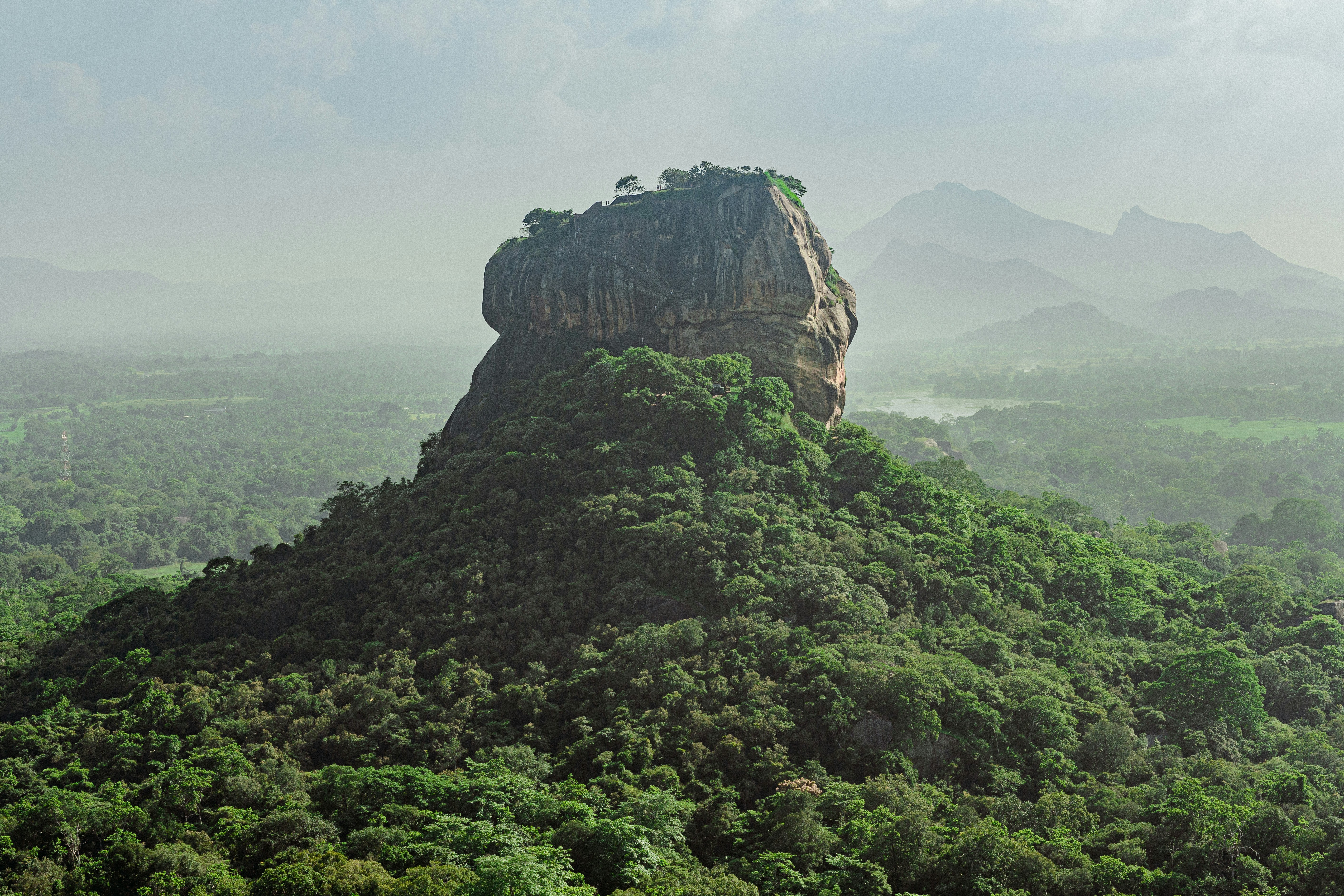
Sigiriya rises nearly 200 metres above the surrounding plains in Sri Lanka's Cultural Triangle. The site is best known for the fifth-century palace and fortress associated with King Kashyapa, but the rock and its surroundings had religious importance before and after his reign. Visitors approach through formal water gardens, moats, boulder gardens, and terraced areas before climbing towards the frescoes, Mirror Wall, Lion's Paw entrance, and summit ruins. The design makes careful use of the natural landscape, integrating rock formations, water, gardens, and defensive structures. Around the archaeological site, dry-zone forest, tanks, and wetlands support birds, reptiles, monkeys, and other wildlife, linking one of Sri Lanka's best-known cultural sites with the surrounding natural environment.
Why It Matters
Sigiriya matters because it brings together architecture, engineering, art, landscape design, and political history in one place. Its water gardens and planned layout show a sophisticated understanding of drainage, symmetry, and the natural contours of the land. The surviving frescoes and summit remains offer insight into court life and artistic traditions of the period. Recognised as a UNESCO World Heritage Site, Sigiriya is important not only as a monument but as a complete cultural landscape shaped by both people and nature.
Sigiriya, sri lanka
Sigiriya
| The Lion Rock
Overview:
Sigiriya rises nearly 200 metres above the surrounding plains in Sri Lanka's Cultural Triangle. The site is best known for the fifth-century palace and fortress associated with King Kashyapa, but the rock and its surroundings had religious importance before and after his reign. Visitors approach through formal water gardens, moats, boulder gardens, and terraced areas before climbing towards the frescoes, Mirror Wall, Lion's Paw entrance, and summit ruins. The design makes careful use of the natural landscape, integrating rock formations, water, gardens, and defensive structures. Around the archaeological site, dry-zone forest, tanks, and wetlands support birds, reptiles, monkeys, and other wildlife, linking one of Sri Lanka's best-known cultural sites with the surrounding natural environment.
Why It Matters
Sigiriya matters because it brings together architecture, engineering, art, landscape design, and political history in one place. Its water gardens and planned layout show a sophisticated understanding of drainage, symmetry, and the natural contours of the land. The surviving frescoes and summit remains offer insight into court life and artistic traditions of the period. Recognised as a UNESCO World Heritage Site, Sigiriya is important not only as a monument but as a complete cultural landscape shaped by both people and nature.
Sigiriya, sri lanka
Sigiriya
| The Lion Rock
Overview:
Sigiriya rises nearly 200 metres above the surrounding plains in Sri Lanka's Cultural Triangle. The site is best known for the fifth-century palace and fortress associated with King Kashyapa, but the rock and its surroundings had religious importance before and after his reign. Visitors approach through formal water gardens, moats, boulder gardens, and terraced areas before climbing towards the frescoes, Mirror Wall, Lion's Paw entrance, and summit ruins. The design makes careful use of the natural landscape, integrating rock formations, water, gardens, and defensive structures. Around the archaeological site, dry-zone forest, tanks, and wetlands support birds, reptiles, monkeys, and other wildlife, linking one of Sri Lanka's best-known cultural sites with the surrounding natural environment.
Why It Matters
Sigiriya matters because it brings together architecture, engineering, art, landscape design, and political history in one place. Its water gardens and planned layout show a sophisticated understanding of drainage, symmetry, and the natural contours of the land. The surviving frescoes and summit remains offer insight into court life and artistic traditions of the period. Recognised as a UNESCO World Heritage Site, Sigiriya is important not only as a monument but as a complete cultural landscape shaped by both people and nature.
Sigiriya, sri lanka
Sigiriya
| The Lion Rock
Overview:
Sigiriya rises nearly 200 metres above the surrounding plains in Sri Lanka's Cultural Triangle. The site is best known for the fifth-century palace and fortress associated with King Kashyapa, but the rock and its surroundings had religious importance before and after his reign. Visitors approach through formal water gardens, moats, boulder gardens, and terraced areas before climbing towards the frescoes, Mirror Wall, Lion's Paw entrance, and summit ruins. The design makes careful use of the natural landscape, integrating rock formations, water, gardens, and defensive structures. Around the archaeological site, dry-zone forest, tanks, and wetlands support birds, reptiles, monkeys, and other wildlife, linking one of Sri Lanka's best-known cultural sites with the surrounding natural environment.
Why It Matters
Sigiriya matters because it brings together architecture, engineering, art, landscape design, and political history in one place. Its water gardens and planned layout show a sophisticated understanding of drainage, symmetry, and the natural contours of the land. The surviving frescoes and summit remains offer insight into court life and artistic traditions of the period. Recognised as a UNESCO World Heritage Site, Sigiriya is important not only as a monument but as a complete cultural landscape shaped by both people and nature.
Anuradhapura, sri lanka
Anuradhapura
| Sri Lanka's First Capital
Overview:
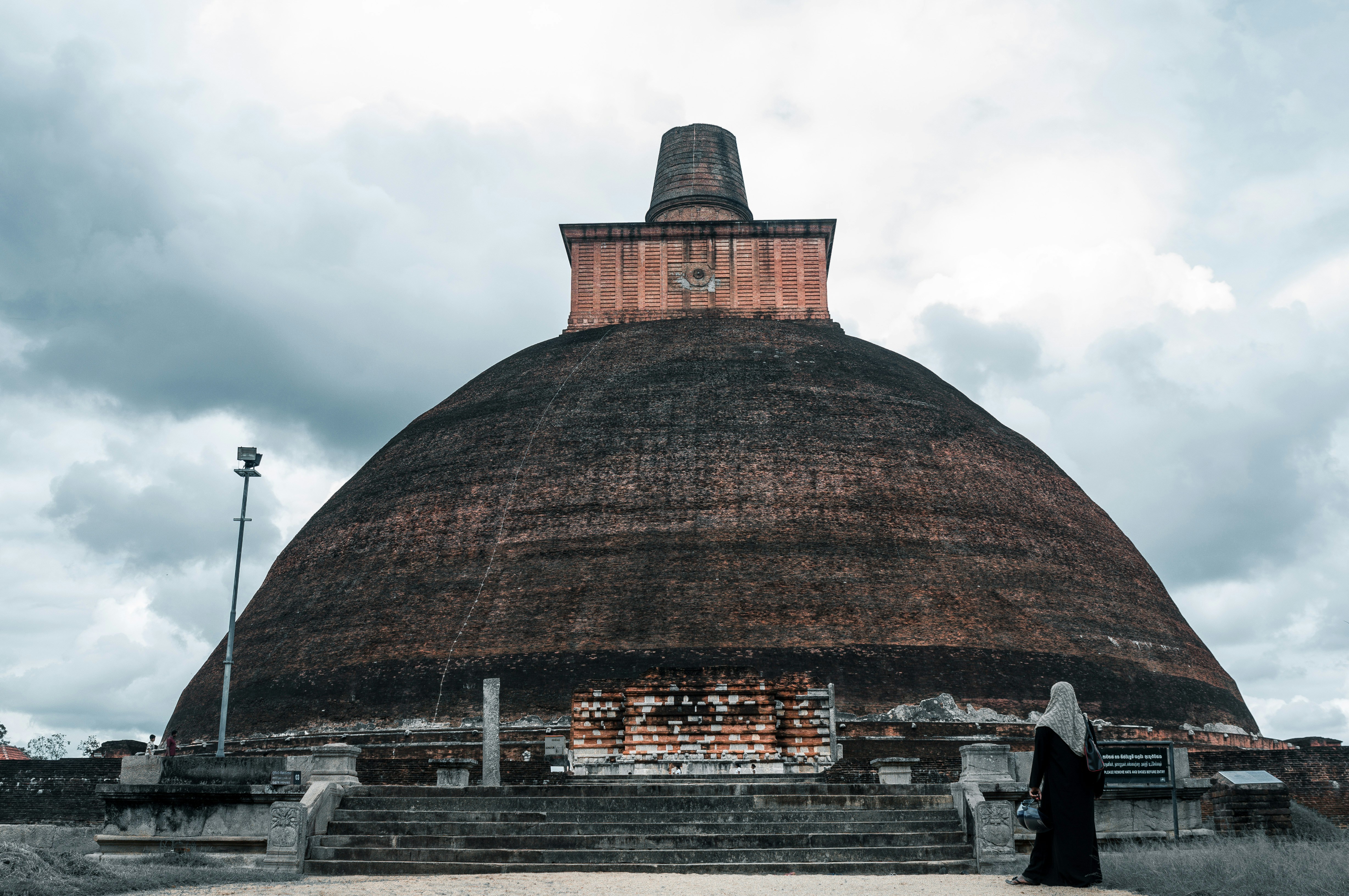
Anuradhapura was Sri Lanka's first major capital and remained a centre of political and religious life for more than a thousand years. The ancient city covers a large area of monasteries, stupas, reservoirs, stone carvings, bathing ponds, and the remains of royal and civic buildings. Among its best-known monuments are Ruwanwelisaya, Jetavanaramaya, Abhayagiri, and the Sri Maha Bodhi, a sacred fig tree grown from a branch of the tree beneath which the Buddha is believed to have attained enlightenment. Unlike a closed archaeological site, Anuradhapura remains an active place of worship. Pilgrims, monks, local residents, and visitors continue to use the same sacred landscape, especially during religious festivals and full-moon days.
Why It Matters
Anuradhapura is central to understanding the development of Buddhism, statecraft, irrigation, and urban life in ancient Sri Lanka. Its enormous stupas and monastery complexes reflect the scale and organisation of the kingdoms that built them. The surrounding reservoirs and canals also show how water management supported a large population in a seasonally dry region. As a UNESCO World Heritage Site and a living religious centre, Anuradhapura connects archaeological history with practices that continue today.
Anuradhapura, sri lanka
Anuradhapura
| Sri Lanka's First Capital
Overview:
Anuradhapura was Sri Lanka's first major capital and remained a centre of political and religious life for more than a thousand years. The ancient city covers a large area of monasteries, stupas, reservoirs, stone carvings, bathing ponds, and the remains of royal and civic buildings. Among its best-known monuments are Ruwanwelisaya, Jetavanaramaya, Abhayagiri, and the Sri Maha Bodhi, a sacred fig tree grown from a branch of the tree beneath which the Buddha is believed to have attained enlightenment. Unlike a closed archaeological site, Anuradhapura remains an active place of worship. Pilgrims, monks, local residents, and visitors continue to use the same sacred landscape, especially during religious festivals and full-moon days.
Why It Matters
Anuradhapura is central to understanding the development of Buddhism, statecraft, irrigation, and urban life in ancient Sri Lanka. Its enormous stupas and monastery complexes reflect the scale and organisation of the kingdoms that built them. The surrounding reservoirs and canals also show how water management supported a large population in a seasonally dry region. As a UNESCO World Heritage Site and a living religious centre, Anuradhapura connects archaeological history with practices that continue today.
Anuradhapura, sri lanka
Anuradhapura
| Sri Lanka's First Capital
Overview:
Anuradhapura was Sri Lanka's first major capital and remained a centre of political and religious life for more than a thousand years. The ancient city covers a large area of monasteries, stupas, reservoirs, stone carvings, bathing ponds, and the remains of royal and civic buildings. Among its best-known monuments are Ruwanwelisaya, Jetavanaramaya, Abhayagiri, and the Sri Maha Bodhi, a sacred fig tree grown from a branch of the tree beneath which the Buddha is believed to have attained enlightenment. Unlike a closed archaeological site, Anuradhapura remains an active place of worship. Pilgrims, monks, local residents, and visitors continue to use the same sacred landscape, especially during religious festivals and full-moon days.
Why It Matters
Anuradhapura is central to understanding the development of Buddhism, statecraft, irrigation, and urban life in ancient Sri Lanka. Its enormous stupas and monastery complexes reflect the scale and organisation of the kingdoms that built them. The surrounding reservoirs and canals also show how water management supported a large population in a seasonally dry region. As a UNESCO World Heritage Site and a living religious centre, Anuradhapura connects archaeological history with practices that continue today.
Anuradhapura, sri lanka
Anuradhapura
| Sri Lanka's First Capital
Overview:
Anuradhapura was Sri Lanka's first major capital and remained a centre of political and religious life for more than a thousand years. The ancient city covers a large area of monasteries, stupas, reservoirs, stone carvings, bathing ponds, and the remains of royal and civic buildings. Among its best-known monuments are Ruwanwelisaya, Jetavanaramaya, Abhayagiri, and the Sri Maha Bodhi, a sacred fig tree grown from a branch of the tree beneath which the Buddha is believed to have attained enlightenment. Unlike a closed archaeological site, Anuradhapura remains an active place of worship. Pilgrims, monks, local residents, and visitors continue to use the same sacred landscape, especially during religious festivals and full-moon days.
Why It Matters
Anuradhapura is central to understanding the development of Buddhism, statecraft, irrigation, and urban life in ancient Sri Lanka. Its enormous stupas and monastery complexes reflect the scale and organisation of the kingdoms that built them. The surrounding reservoirs and canals also show how water management supported a large population in a seasonally dry region. As a UNESCO World Heritage Site and a living religious centre, Anuradhapura connects archaeological history with practices that continue today.
Dambulla, sri lanka
Dambulla Cave Temple
| Caves of Gold
Overview:
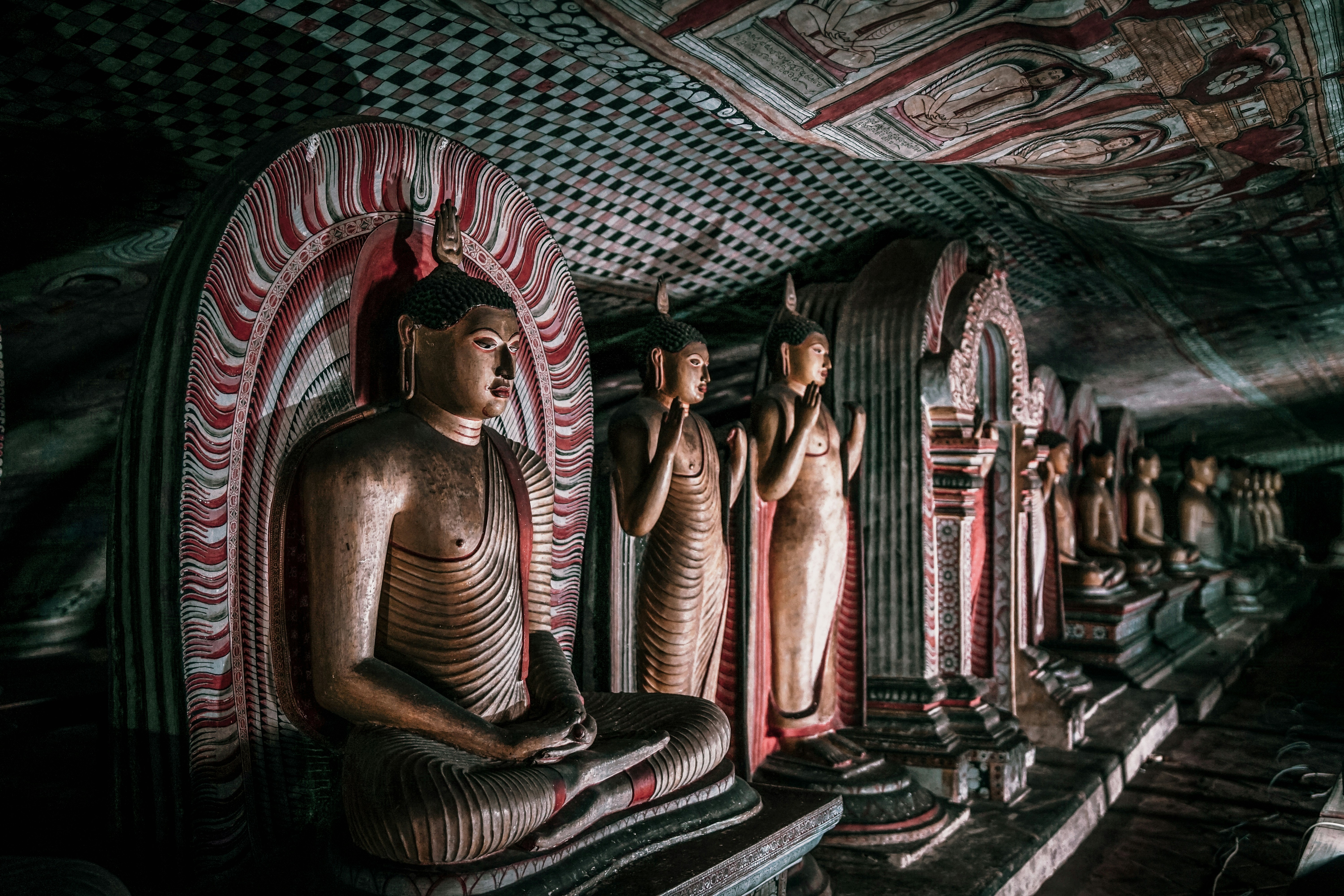
Dambulla Cave Temple is built beneath a large rock outcrop that rises above Sri Lanka's central plains. A climb leads to a row of five principal caves containing Buddhist statues, painted ceilings, and wall murals created and restored over many centuries. The site has been associated with monastic activity for more than two thousand years, and tradition links its early development to King Valagamba in the first century BCE. Inside the caves, reclining, standing, and seated Buddha figures appear alongside images of kings, deities, and scenes from Buddhist tradition. The dim interiors, painted surfaces, and active religious use create a very different experience from open archaeological sites such as Anuradhapura or Polonnaruwa.
Why It Matters
Dambulla matters because it preserves a long record of Sri Lankan Buddhist art within a site that is still used for worship. The paintings and statues were not created at one moment; they reflect repeated periods of patronage, restoration, and changing artistic styles. Recognised as a UNESCO World Heritage Site, the complex offers insight into the relationship between royal power, monastic communities, pilgrimage, and visual culture. Its importance lies in both the age of the site and the continuity of its religious use.
Dambulla, sri lanka
Dambulla Cave Temple
| Caves of Gold
Overview:
Dambulla Cave Temple is built beneath a large rock outcrop that rises above Sri Lanka's central plains. A climb leads to a row of five principal caves containing Buddhist statues, painted ceilings, and wall murals created and restored over many centuries. The site has been associated with monastic activity for more than two thousand years, and tradition links its early development to King Valagamba in the first century BCE. Inside the caves, reclining, standing, and seated Buddha figures appear alongside images of kings, deities, and scenes from Buddhist tradition. The dim interiors, painted surfaces, and active religious use create a very different experience from open archaeological sites such as Anuradhapura or Polonnaruwa.
Why It Matters
Dambulla matters because it preserves a long record of Sri Lankan Buddhist art within a site that is still used for worship. The paintings and statues were not created at one moment; they reflect repeated periods of patronage, restoration, and changing artistic styles. Recognised as a UNESCO World Heritage Site, the complex offers insight into the relationship between royal power, monastic communities, pilgrimage, and visual culture. Its importance lies in both the age of the site and the continuity of its religious use.
Dambulla, sri lanka
Dambulla Cave Temple
| Caves of Gold
Overview:
Dambulla Cave Temple is built beneath a large rock outcrop that rises above Sri Lanka's central plains. A climb leads to a row of five principal caves containing Buddhist statues, painted ceilings, and wall murals created and restored over many centuries. The site has been associated with monastic activity for more than two thousand years, and tradition links its early development to King Valagamba in the first century BCE. Inside the caves, reclining, standing, and seated Buddha figures appear alongside images of kings, deities, and scenes from Buddhist tradition. The dim interiors, painted surfaces, and active religious use create a very different experience from open archaeological sites such as Anuradhapura or Polonnaruwa.
Why It Matters
Dambulla matters because it preserves a long record of Sri Lankan Buddhist art within a site that is still used for worship. The paintings and statues were not created at one moment; they reflect repeated periods of patronage, restoration, and changing artistic styles. Recognised as a UNESCO World Heritage Site, the complex offers insight into the relationship between royal power, monastic communities, pilgrimage, and visual culture. Its importance lies in both the age of the site and the continuity of its religious use.
Dambulla, sri lanka
Dambulla Cave Temple
| Caves of Gold
Overview:
Dambulla Cave Temple is built beneath a large rock outcrop that rises above Sri Lanka's central plains. A climb leads to a row of five principal caves containing Buddhist statues, painted ceilings, and wall murals created and restored over many centuries. The site has been associated with monastic activity for more than two thousand years, and tradition links its early development to King Valagamba in the first century BCE. Inside the caves, reclining, standing, and seated Buddha figures appear alongside images of kings, deities, and scenes from Buddhist tradition. The dim interiors, painted surfaces, and active religious use create a very different experience from open archaeological sites such as Anuradhapura or Polonnaruwa.
Why It Matters
Dambulla matters because it preserves a long record of Sri Lankan Buddhist art within a site that is still used for worship. The paintings and statues were not created at one moment; they reflect repeated periods of patronage, restoration, and changing artistic styles. Recognised as a UNESCO World Heritage Site, the complex offers insight into the relationship between royal power, monastic communities, pilgrimage, and visual culture. Its importance lies in both the age of the site and the continuity of its religious use.

Kandy, sri lanka
Kandy
| The Last Royal Capital
Overview:
Kandy lies in Sri Lanka's central hills at an elevation of around 500 metres. It was the last capital of the island's independent Sinhalese kingdom and remained outside direct European control longer than the coastal regions. The city is organised around Kandy Lake and the Temple of the Sacred Tooth Relic, with hills rising closely around the centre. Markets, religious buildings, colonial-era structures, and residential neighbourhoods give Kandy a compact but varied character. The cooler climate and surrounding greenery distinguish it from Colombo and the dry-zone ancient cities. Nearby attractions such as the Royal Botanic Gardens at Peradeniya also make Kandy a practical base for exploring the central highlands.
Why It Matters
Kandy remains one of Sri Lanka's most important religious and cultural centres. The Temple of the Sacred Tooth Relic houses the country's most revered Buddhist relic, historically linked with the right to rule. The annual Esala Perahera brings together religious ceremony, music, dance, and processions that reflect living traditions rather than reconstructed history. As a UNESCO World Heritage Site, Kandy is valued for its royal past, sacred architecture, and continuing role in Sri Lankan Buddhist life.
Kandy, sri lanka
Kandy
| The Last Royal Capital
Overview:
Kandy lies in Sri Lanka's central hills at an elevation of around 500 metres. It was the last capital of the island's independent Sinhalese kingdom and remained outside direct European control longer than the coastal regions. The city is organised around Kandy Lake and the Temple of the Sacred Tooth Relic, with hills rising closely around the centre. Markets, religious buildings, colonial-era structures, and residential neighbourhoods give Kandy a compact but varied character. The cooler climate and surrounding greenery distinguish it from Colombo and the dry-zone ancient cities. Nearby attractions such as the Royal Botanic Gardens at Peradeniya also make Kandy a practical base for exploring the central highlands.
Why It Matters
Kandy remains one of Sri Lanka's most important religious and cultural centres. The Temple of the Sacred Tooth Relic houses the country's most revered Buddhist relic, historically linked with the right to rule. The annual Esala Perahera brings together religious ceremony, music, dance, and processions that reflect living traditions rather than reconstructed history. As a UNESCO World Heritage Site, Kandy is valued for its royal past, sacred architecture, and continuing role in Sri Lankan Buddhist life.
Kandy, sri lanka
Kandy
| The Last Royal Capital
Overview:
Kandy lies in Sri Lanka's central hills at an elevation of around 500 metres. It was the last capital of the island's independent Sinhalese kingdom and remained outside direct European control longer than the coastal regions. The city is organised around Kandy Lake and the Temple of the Sacred Tooth Relic, with hills rising closely around the centre. Markets, religious buildings, colonial-era structures, and residential neighbourhoods give Kandy a compact but varied character. The cooler climate and surrounding greenery distinguish it from Colombo and the dry-zone ancient cities. Nearby attractions such as the Royal Botanic Gardens at Peradeniya also make Kandy a practical base for exploring the central highlands.
Why It Matters
Kandy remains one of Sri Lanka's most important religious and cultural centres. The Temple of the Sacred Tooth Relic houses the country's most revered Buddhist relic, historically linked with the right to rule. The annual Esala Perahera brings together religious ceremony, music, dance, and processions that reflect living traditions rather than reconstructed history. As a UNESCO World Heritage Site, Kandy is valued for its royal past, sacred architecture, and continuing role in Sri Lankan Buddhist life.
Kandy, sri lanka
Kandy
| The Last Royal Capital
Overview:
Kandy lies in Sri Lanka's central hills at an elevation of around 500 metres. It was the last capital of the island's independent Sinhalese kingdom and remained outside direct European control longer than the coastal regions. The city is organised around Kandy Lake and the Temple of the Sacred Tooth Relic, with hills rising closely around the centre. Markets, religious buildings, colonial-era structures, and residential neighbourhoods give Kandy a compact but varied character. The cooler climate and surrounding greenery distinguish it from Colombo and the dry-zone ancient cities. Nearby attractions such as the Royal Botanic Gardens at Peradeniya also make Kandy a practical base for exploring the central highlands.
Why It Matters
Kandy remains one of Sri Lanka's most important religious and cultural centres. The Temple of the Sacred Tooth Relic houses the country's most revered Buddhist relic, historically linked with the right to rule. The annual Esala Perahera brings together religious ceremony, music, dance, and processions that reflect living traditions rather than reconstructed history. As a UNESCO World Heritage Site, Kandy is valued for its royal past, sacred architecture, and continuing role in Sri Lankan Buddhist life.
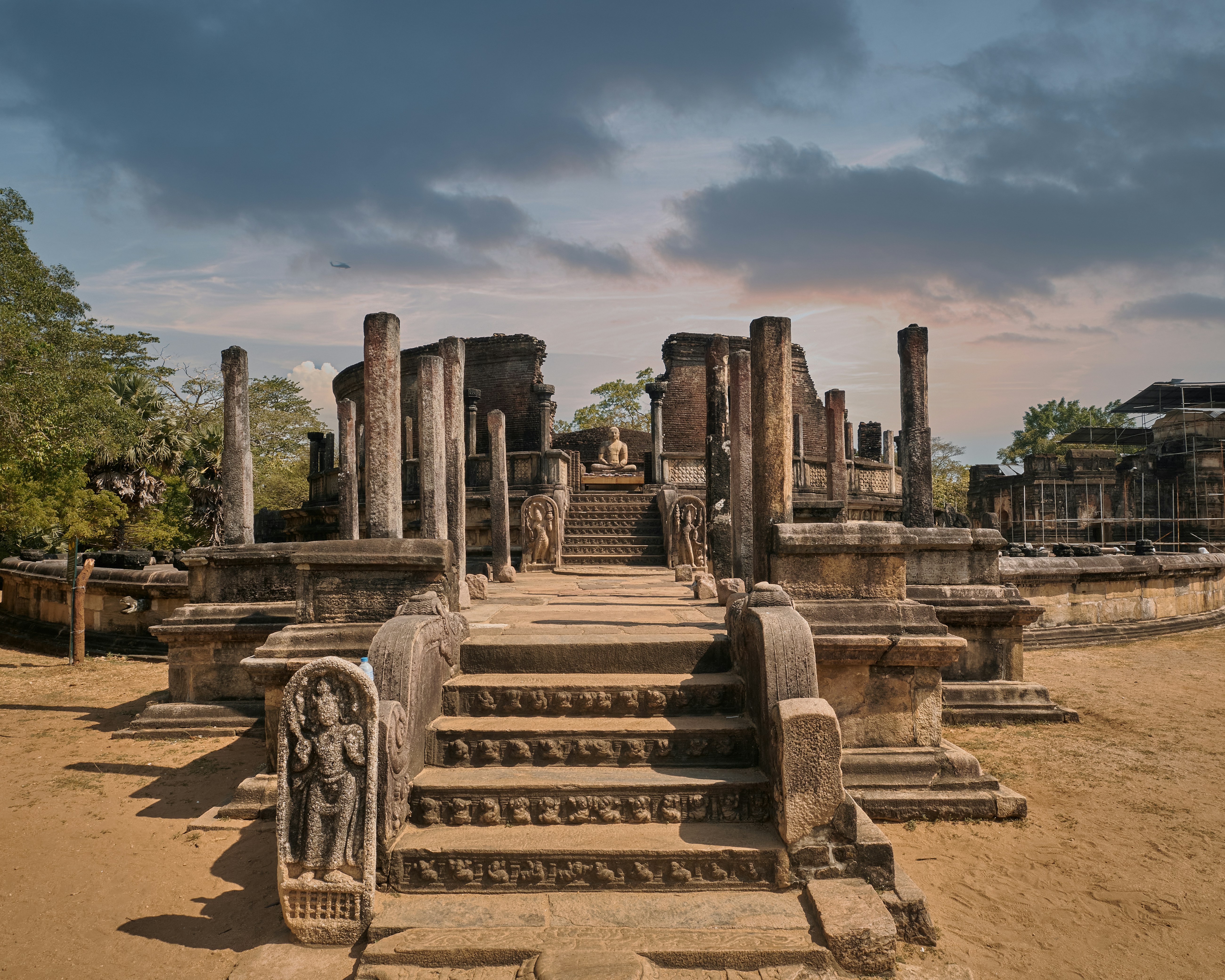
Polonnaruwa, sri lanka
Polonnaruwa
| The Medieval Capital
Overview:
Polonnaruwa became Sri Lanka's main royal capital after Anuradhapura and reached its height between the eleventh and thirteenth centuries. The archaeological area contains the remains of palaces, audience halls, monasteries, image houses, bathing ponds, and religious monuments spread across a planned urban landscape. Among the best-known sites are the Royal Palace complex, the Quadrangle, Lankatilaka, Rankot Vihara, and Gal Vihara, where four Buddha figures are carved from a single granite outcrop. The ancient city is closely connected to Parakrama Samudra, the large reservoir associated with King Parakramabahu I. Today, the open layout can be explored by vehicle, bicycle, or on foot, with monkeys and birdlife frequently seen among the ruins. The archaeological site has been the focus of one of Asia's longest-running field studies of gray langurs for more than five decades.
Why It Matters
Polonnaruwa demonstrates the engineering and administrative strength of medieval Sri Lanka. Its reservoirs, canals, and planned buildings show how water management supported agriculture, urban growth, and royal authority. The sculptures at Gal Vihara are among the finest surviving examples of Sri Lankan stone carving, while the wider site preserves influences from both Buddhist and Hindu traditions. As a UNESCO World Heritage Site, Polonnaruwa is important for understanding a period when architecture, irrigation, religion, and government developed together on a large scale.
Polonnaruwa, sri lanka
Polonnaruwa
| The Medieval Capital
Overview:
Polonnaruwa became Sri Lanka's main royal capital after Anuradhapura and reached its height between the eleventh and thirteenth centuries. The archaeological area contains the remains of palaces, audience halls, monasteries, image houses, bathing ponds, and religious monuments spread across a planned urban landscape. Among the best-known sites are the Royal Palace complex, the Quadrangle, Lankatilaka, Rankot Vihara, and Gal Vihara, where four Buddha figures are carved from a single granite outcrop. The ancient city is closely connected to Parakrama Samudra, the large reservoir associated with King Parakramabahu I. Today, the open layout can be explored by vehicle, bicycle, or on foot, with monkeys and birdlife frequently seen among the ruins. The archaeological site has been the focus of one of Asia's longest-running field studies of gray langurs for more than five decades.
Why It Matters
Polonnaruwa demonstrates the engineering and administrative strength of medieval Sri Lanka. Its reservoirs, canals, and planned buildings show how water management supported agriculture, urban growth, and royal authority. The sculptures at Gal Vihara are among the finest surviving examples of Sri Lankan stone carving, while the wider site preserves influences from both Buddhist and Hindu traditions. As a UNESCO World Heritage Site, Polonnaruwa is important for understanding a period when architecture, irrigation, religion, and government developed together on a large scale.
Polonnaruwa, sri lanka
Polonnaruwa
| The Medieval Capital
Overview:
Polonnaruwa became Sri Lanka's main royal capital after Anuradhapura and reached its height between the eleventh and thirteenth centuries. The archaeological area contains the remains of palaces, audience halls, monasteries, image houses, bathing ponds, and religious monuments spread across a planned urban landscape. Among the best-known sites are the Royal Palace complex, the Quadrangle, Lankatilaka, Rankot Vihara, and Gal Vihara, where four Buddha figures are carved from a single granite outcrop. The ancient city is closely connected to Parakrama Samudra, the large reservoir associated with King Parakramabahu I. Today, the open layout can be explored by vehicle, bicycle, or on foot, with monkeys and birdlife frequently seen among the ruins. The archaeological site has been the focus of one of Asia's longest-running field studies of gray langurs for more than five decades.
Why It Matters
Polonnaruwa demonstrates the engineering and administrative strength of medieval Sri Lanka. Its reservoirs, canals, and planned buildings show how water management supported agriculture, urban growth, and royal authority. The sculptures at Gal Vihara are among the finest surviving examples of Sri Lankan stone carving, while the wider site preserves influences from both Buddhist and Hindu traditions. As a UNESCO World Heritage Site, Polonnaruwa is important for understanding a period when architecture, irrigation, religion, and government developed together on a large scale.
Polonnaruwa, sri lanka
Polonnaruwa
| The Medieval Capital
Overview:
Polonnaruwa became Sri Lanka's main royal capital after Anuradhapura and reached its height between the eleventh and thirteenth centuries. The archaeological area contains the remains of palaces, audience halls, monasteries, image houses, bathing ponds, and religious monuments spread across a planned urban landscape. Among the best-known sites are the Royal Palace complex, the Quadrangle, Lankatilaka, Rankot Vihara, and Gal Vihara, where four Buddha figures are carved from a single granite outcrop. The ancient city is closely connected to Parakrama Samudra, the large reservoir associated with King Parakramabahu I. Today, the open layout can be explored by vehicle, bicycle, or on foot, with monkeys and birdlife frequently seen among the ruins. The archaeological site has been the focus of one of Asia's longest-running field studies of gray langurs for more than five decades.
Why It Matters
Polonnaruwa demonstrates the engineering and administrative strength of medieval Sri Lanka. Its reservoirs, canals, and planned buildings show how water management supported agriculture, urban growth, and royal authority. The sculptures at Gal Vihara are among the finest surviving examples of Sri Lankan stone carving, while the wider site preserves influences from both Buddhist and Hindu traditions. As a UNESCO World Heritage Site, Polonnaruwa is important for understanding a period when architecture, irrigation, religion, and government developed together on a large scale.

Galle Fort, sri lanka
Galle Fort
| Ramparts by the Sea
Overview:
Galle Fort stands on a rocky headland on Sri Lanka's south coast. The Portuguese established the first fortifications in the sixteenth century, and the Dutch greatly expanded them during the seventeenth century. The British later used and adapted the site without removing its main defensive structure. Today, thick ramparts enclose a living town of narrow streets, houses, churches, mosques, public buildings, shops, cafés, and small hotels. A walk along the walls passes bastions, the lighthouse, the old harbour approaches, and broad views across the Indian Ocean. The fort's character comes from the continued use of its buildings rather than from being preserved as an empty monument.
Why It Matters
Galle Fort records several centuries of maritime trade, colonial rule, and cultural exchange in the Indian Ocean. Its street plan and fortifications are European in origin, but its buildings and community reflect local materials, climate, labour, and traditions. Recognised as a UNESCO World Heritage Site, it is considered one of the best-preserved fortified colonial towns in South and Southeast Asia. Its importance lies in remaining a functioning neighbourhood while still retaining the main structure and character of the historic fort.
Galle Fort, sri lanka
Galle Fort
| Ramparts by the Sea
Overview:
Galle Fort stands on a rocky headland on Sri Lanka's south coast. The Portuguese established the first fortifications in the sixteenth century, and the Dutch greatly expanded them during the seventeenth century. The British later used and adapted the site without removing its main defensive structure. Today, thick ramparts enclose a living town of narrow streets, houses, churches, mosques, public buildings, shops, cafés, and small hotels. A walk along the walls passes bastions, the lighthouse, the old harbour approaches, and broad views across the Indian Ocean. The fort's character comes from the continued use of its buildings rather than from being preserved as an empty monument.
Why It Matters
Galle Fort records several centuries of maritime trade, colonial rule, and cultural exchange in the Indian Ocean. Its street plan and fortifications are European in origin, but its buildings and community reflect local materials, climate, labour, and traditions. Recognised as a UNESCO World Heritage Site, it is considered one of the best-preserved fortified colonial towns in South and Southeast Asia. Its importance lies in remaining a functioning neighbourhood while still retaining the main structure and character of the historic fort.
Galle Fort, sri lanka
Galle Fort
| Ramparts by the Sea
Overview:
Galle Fort stands on a rocky headland on Sri Lanka's south coast. The Portuguese established the first fortifications in the sixteenth century, and the Dutch greatly expanded them during the seventeenth century. The British later used and adapted the site without removing its main defensive structure. Today, thick ramparts enclose a living town of narrow streets, houses, churches, mosques, public buildings, shops, cafés, and small hotels. A walk along the walls passes bastions, the lighthouse, the old harbour approaches, and broad views across the Indian Ocean. The fort's character comes from the continued use of its buildings rather than from being preserved as an empty monument.
Why It Matters
Galle Fort records several centuries of maritime trade, colonial rule, and cultural exchange in the Indian Ocean. Its street plan and fortifications are European in origin, but its buildings and community reflect local materials, climate, labour, and traditions. Recognised as a UNESCO World Heritage Site, it is considered one of the best-preserved fortified colonial towns in South and Southeast Asia. Its importance lies in remaining a functioning neighbourhood while still retaining the main structure and character of the historic fort.
Galle Fort, sri lanka
Galle Fort
| Ramparts by the Sea
Overview:
Galle Fort stands on a rocky headland on Sri Lanka's south coast. The Portuguese established the first fortifications in the sixteenth century, and the Dutch greatly expanded them during the seventeenth century. The British later used and adapted the site without removing its main defensive structure. Today, thick ramparts enclose a living town of narrow streets, houses, churches, mosques, public buildings, shops, cafés, and small hotels. A walk along the walls passes bastions, the lighthouse, the old harbour approaches, and broad views across the Indian Ocean. The fort's character comes from the continued use of its buildings rather than from being preserved as an empty monument.
Why It Matters
Galle Fort records several centuries of maritime trade, colonial rule, and cultural exchange in the Indian Ocean. Its street plan and fortifications are European in origin, but its buildings and community reflect local materials, climate, labour, and traditions. Recognised as a UNESCO World Heritage Site, it is considered one of the best-preserved fortified colonial towns in South and Southeast Asia. Its importance lies in remaining a functioning neighbourhood while still retaining the main structure and character of the historic fort.

Ritigala, sri lanka
Ritigala
| The Forgotten Monastery
Overview:
Ritigala is a forested mountain range rising above the dry plains of north-central Sri Lanka. Hidden within the lower slopes are the remains of an ancient Buddhist monastery reached by a stone pathway through dense forest. The ruins include meditation platforms, bridges, steps, courtyards, drainage channels, and large stone-lined paths built with a restraint that suits the monastic setting. Ritigala's elevation creates cooler and wetter conditions than the surrounding lowlands, allowing plant communities more typical of other climatic zones to survive on the mountain. Visitors are restricted to the main archaeological route, while the higher slopes remain protected as part of a strict nature reserve.
Why It Matters
Ritigala is significant because its archaeology and ecology cannot be separated. The monastery was created for monks seeking seclusion, and the forested mountain still provides that sense of isolation. More than 440 species of flowering plants have been recorded at Ritigala, while the unusual climate and altitude support plant species with limited distributions. The reserve also protects wildlife within an otherwise dry landscape. Ritigala therefore offers more than ruins: it shows how religious life, water management, stone construction and forest conservation have shared the same mountain for centuries.
Ritigala, sri lanka
Ritigala
| The Forgotten Monastery
Overview:
Ritigala is a forested mountain range rising above the dry plains of north-central Sri Lanka. Hidden within the lower slopes are the remains of an ancient Buddhist monastery reached by a stone pathway through dense forest. The ruins include meditation platforms, bridges, steps, courtyards, drainage channels, and large stone-lined paths built with a restraint that suits the monastic setting. Ritigala's elevation creates cooler and wetter conditions than the surrounding lowlands, allowing plant communities more typical of other climatic zones to survive on the mountain. Visitors are restricted to the main archaeological route, while the higher slopes remain protected as part of a strict nature reserve.
Why It Matters
Ritigala is significant because its archaeology and ecology cannot be separated. The monastery was created for monks seeking seclusion, and the forested mountain still provides that sense of isolation. More than 440 species of flowering plants have been recorded at Ritigala, while the unusual climate and altitude support plant species with limited distributions. The reserve also protects wildlife within an otherwise dry landscape. Ritigala therefore offers more than ruins: it shows how religious life, water management, stone construction and forest conservation have shared the same mountain for centuries.
Ritigala, sri lanka
Ritigala
| The Forgotten Monastery
Overview:
Ritigala is a forested mountain range rising above the dry plains of north-central Sri Lanka. Hidden within the lower slopes are the remains of an ancient Buddhist monastery reached by a stone pathway through dense forest. The ruins include meditation platforms, bridges, steps, courtyards, drainage channels, and large stone-lined paths built with a restraint that suits the monastic setting. Ritigala's elevation creates cooler and wetter conditions than the surrounding lowlands, allowing plant communities more typical of other climatic zones to survive on the mountain. Visitors are restricted to the main archaeological route, while the higher slopes remain protected as part of a strict nature reserve.
Why It Matters
Ritigala is significant because its archaeology and ecology cannot be separated. The monastery was created for monks seeking seclusion, and the forested mountain still provides that sense of isolation. More than 440 species of flowering plants have been recorded at Ritigala, while the unusual climate and altitude support plant species with limited distributions. The reserve also protects wildlife within an otherwise dry landscape. Ritigala therefore offers more than ruins: it shows how religious life, water management, stone construction and forest conservation have shared the same mountain for centuries.
Ritigala, sri lanka
Ritigala
| The Forgotten Monastery
Overview:
Ritigala is a forested mountain range rising above the dry plains of north-central Sri Lanka. Hidden within the lower slopes are the remains of an ancient Buddhist monastery reached by a stone pathway through dense forest. The ruins include meditation platforms, bridges, steps, courtyards, drainage channels, and large stone-lined paths built with a restraint that suits the monastic setting. Ritigala's elevation creates cooler and wetter conditions than the surrounding lowlands, allowing plant communities more typical of other climatic zones to survive on the mountain. Visitors are restricted to the main archaeological route, while the higher slopes remain protected as part of a strict nature reserve.
Why It Matters
Ritigala is significant because its archaeology and ecology cannot be separated. The monastery was created for monks seeking seclusion, and the forested mountain still provides that sense of isolation. More than 440 species of flowering plants have been recorded at Ritigala, while the unusual climate and altitude support plant species with limited distributions. The reserve also protects wildlife within an otherwise dry landscape. Ritigala therefore offers more than ruins: it shows how religious life, water management, stone construction and forest conservation have shared the same mountain for centuries.


Explore our adventures
Have
Question?
What makes Wild Outside tours different from others?
Wild Outside is built on a deep passion for Sri Lanka’s wildlife and natural history. Our strong connections with researchers, naturalists, photographers, and conservationists allow us to create authentic experiences guided by local knowledge and a genuine appreciation for the island’s biodiversity.
Are the tours suitable for beginners or non-hikers?
Yes. We offer tours ranging from relaxed nature experiences to more immersive wildlife expeditions. We consider your interests, fitness level, and preferences to recommend the right tour or create a tailor-made journey.
Is it safe to travel in remote wildlife areas?
Yes. Sri Lanka is a safe destination for wildlife travel, and our experienced guides carefully plan each journey based on local conditions, wildlife activity, and responsible practices.
Can I book a private or customized experience?
Yes. We specialize in creating customized wildlife journeys based on your interests, travel dates, preferred pace, and specific wildlife interests. We are happy to tailor any itinerary to suit your needs.
Do you guarantee wildlife sightings?
Wild animals are free-ranging and sightings can never be guaranteed. However, our guides use their local knowledge and experience to maximize opportunities while always prioritizing responsible wildlife viewing.
Are your tours suitable for photographers?
Yes. Many of our tours are suitable for wildlife photographers, from enthusiastic beginners to experienced professionals. We can also create specialized photography itineraries based on target species and seasonal opportunities.

Explore our adventures
Have
Question?
What makes Wild Outside tours different from others?
Wild Outside is built on a deep passion for Sri Lanka’s wildlife and natural history. Our strong connections with researchers, naturalists, photographers, and conservationists allow us to create authentic experiences guided by local knowledge and a genuine appreciation for the island’s biodiversity.
Are the tours suitable for beginners or non-hikers?
Yes. We offer tours ranging from relaxed nature experiences to more immersive wildlife expeditions. We consider your interests, fitness level, and preferences to recommend the right tour or create a tailor-made journey.
Is it safe to travel in remote wildlife areas?
Yes. Sri Lanka is a safe destination for wildlife travel, and our experienced guides carefully plan each journey based on local conditions, wildlife activity, and responsible practices.
Can I book a private or customized experience?
Yes. We specialize in creating customized wildlife journeys based on your interests, travel dates, preferred pace, and specific wildlife interests. We are happy to tailor any itinerary to suit your needs.
Do you guarantee wildlife sightings?
Wild animals are free-ranging and sightings can never be guaranteed. However, our guides use their local knowledge and experience to maximize opportunities while always prioritizing responsible wildlife viewing.
Are your tours suitable for photographers?
Yes. Many of our tours are suitable for wildlife photographers, from enthusiastic beginners to experienced professionals. We can also create specialized photography itineraries based on target species and seasonal opportunities.
Explore our adventures
Have
Question?
What makes Wild Outside tours different from others?
Wild Outside is built on a deep passion for Sri Lanka’s wildlife and natural history. Our strong connections with researchers, naturalists, photographers, and conservationists allow us to create authentic experiences guided by local knowledge and a genuine appreciation for the island’s biodiversity.
Are the tours suitable for beginners or non-hikers?
Yes. We offer tours ranging from relaxed nature experiences to more immersive wildlife expeditions. We consider your interests, fitness level, and preferences to recommend the right tour or create a tailor-made journey.
Is it safe to travel in remote wildlife areas?
Yes. Sri Lanka is a safe destination for wildlife travel, and our experienced guides carefully plan each journey based on local conditions, wildlife activity, and responsible practices.
Can I book a private or customized experience?
Yes. We specialize in creating customized wildlife journeys based on your interests, travel dates, preferred pace, and specific wildlife interests. We are happy to tailor any itinerary to suit your needs.
Do you guarantee wildlife sightings?
Wild animals are free-ranging and sightings can never be guaranteed. However, our guides use their local knowledge and experience to maximize opportunities while always prioritizing responsible wildlife viewing.
Are your tours suitable for photographers?
Yes. Many of our tours are suitable for wildlife photographers, from enthusiastic beginners to experienced professionals. We can also create specialized photography itineraries based on target species and seasonal opportunities.
Explore our adventures
Have Question?
What makes Wild Outside tours different from others?
Wild Outside is built on a deep passion for Sri Lanka’s wildlife and natural history. Our strong connections with researchers, naturalists, photographers, and conservationists allow us to create authentic experiences guided by local knowledge and a genuine appreciation for the island’s biodiversity.
Are the tours suitable for beginners or non-hikers?
Yes. We offer tours ranging from relaxed nature experiences to more immersive wildlife expeditions. We consider your interests, fitness level, and preferences to recommend the right tour or create a tailor-made journey.
Is it safe to travel in remote wildlife areas?
Yes. Sri Lanka is a safe destination for wildlife travel, and our experienced guides carefully plan each journey based on local conditions, wildlife activity, and responsible practices.
Can I book a private or customized experience?
Yes. We specialize in creating customized wildlife journeys based on your interests, travel dates, preferred pace, and specific wildlife interests. We are happy to tailor any itinerary to suit your needs.
Do you guarantee wildlife sightings?
Wild animals are free-ranging and sightings can never be guaranteed. However, our guides use their local knowledge and experience to maximize opportunities while always prioritizing responsible wildlife viewing.
Are your tours suitable for photographers?
Yes. Many of our tours are suitable for wildlife photographers, from enthusiastic beginners to experienced professionals. We can also create specialized photography itineraries based on target species and seasonal opportunities.
Endemic Feathers.
THREE PARKS, ONE CAT.
hide & seek.
land of giants.
highland tracks.
on the wing.
under open skies.
Endemic Feathers.
THREE PARKS, ONE CAT.
hide & seek.
land of giants.
highland tracks.
on the wing.
under open skies.
Endemic Feathers.
THREE PARKS, ONE CAT.
hide & seek.
land of giants.
highland tracks.
on the wing.
under open skies.

Let's start an
adventure
featured packages
Resources
Blogs (coming soon)
social
Let's start an
adventure
Resources
Blogs (coming soon)
social
Let's start an
adventure
Resources
Blogs (coming soon)
social
Let's start an adventure
featured packages
Resources
Blogs (coming soon)
social