Monsoon Migration Begins
Peak birdwatching season is here. Join now to witness rare sightings.

From a secretive whistling thrush to Sri Lanka's most colourful forest bird, five species that reward patience, sharp eyes, and a bit of luck in the island's wet-zone forests.
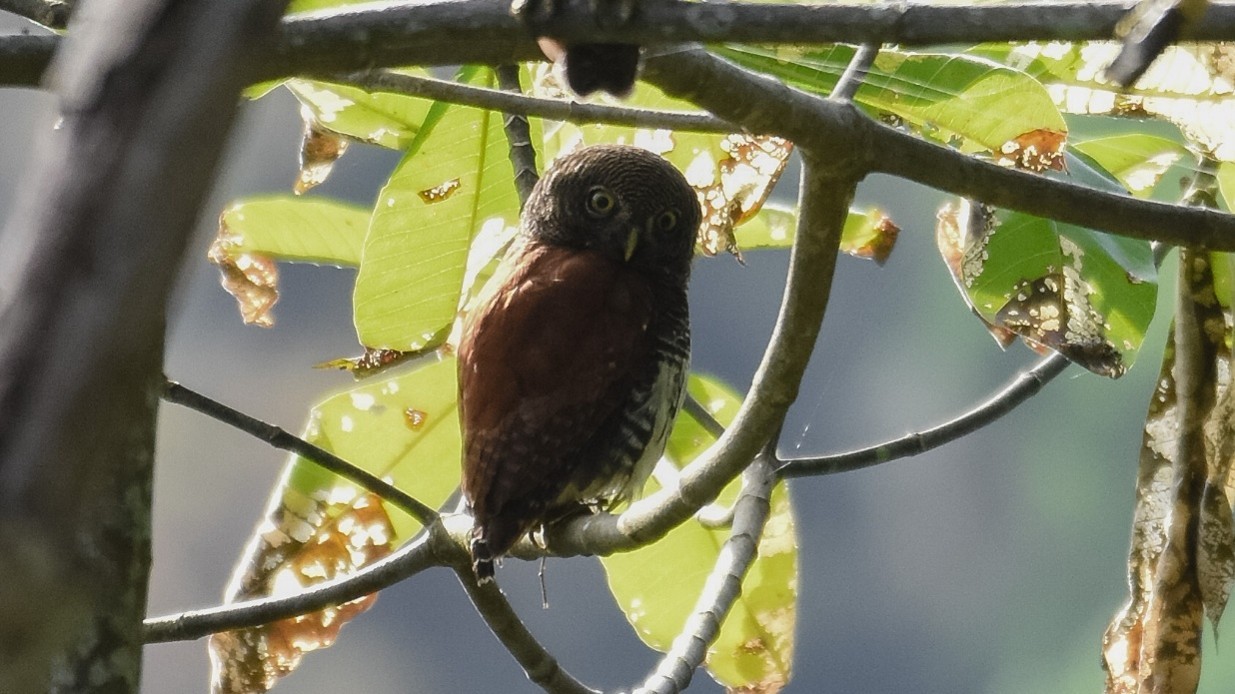
The Chestnut-backed Owlet
The Chestnut-backed Owlet (Glaucidium castanotum) is one of Sri Lanka's endemic birds and one I always enjoy seeing in the wet-zone forests.
It is found mainly in the remaining wet forests and adjoining hills of Sri Lanka. Its rich chestnut-brown back and wings blend surprisingly well into the forest, and it can easily go unnoticed when sitting quietly among the branches.
The Chestnut-backed Owlet is similar to the Jungle Owlet, which is more associated with the drier parts of Sri Lanka. Personally, I prefer the Chestnut-backed Owlet because of its rich chestnut colour and compact appearance.
Another interesting thing about this little owl is that it is not only active after dark. It can also be active during the day, and with some luck you may see or hear one well into the morning.
For an owl, that makes it quite an unusual bird to watch.
Sri Lanka Whistling Thrush
The Sri Lanka Whistling Thrush (Myophonus blighi) is one of Sri Lanka’s endemic birds and a species found in the wet mountain forests of the central highlands.
It was described to science in 1872 by the English zoologist Edmund William Holdsworth.
This is a very secretive bird, often staying in dark vegetation around streams, ravines and the forest floor. Quite often you hear it before you manage to see it.
For me, its voice is one of the most memorable things about this species. Its whistles coming from somewhere inside a quiet mountain forest are difficult to mistake once you know them.
I also really like the colour of the male. At first it can look almost black in the shade, but when the light catches the feathers, the deep blue colour becomes visible. The female looks quite different, with mostly rufous-brown plumage and a blue patch on the shoulder.
It is never a bird I take for granted when I get the chance to see one properly.

Black-naped Monarch
The Black-naped Monarch (Hypothymis azurea) is a beautiful resident bird found in forests and other well-wooded habitats across Sri Lanka.
Unlike many of the birds we look for in Sri Lanka, the Black-naped Monarch is not endemic to the island. The species has a much wider distribution across Asia. The birds found in Sri Lanka belong to the subspecies Hypothymis azurea ceylonensis.
It is an active little bird and spends much of its time moving through trees and shrubs searching for insects. It often sits briefly on a branch before making a quick flight to catch its prey.
For me, however, its greatest attraction is its colour.
The Sri Lankan male has a beautiful blue-purple appearance, and when sunlight catches the feathers the colour can become really impressive.
It may not be one of Sri Lanka’s rarest birds, but it is definitely one I never get tired of seeing.

Spot-winged Thrush
The Spot-winged Thrush (Geokichla spiloptera) is one of Sri Lanka’s endemic forest birds. It was described to science in 1847 by the English zoologist Edward Blyth.
At first it can look like a rather plain brown forest bird. But once you get a proper view, the rows of white spots on the wings, the markings around the face and the heavily spotted underparts make it very distinctive.
It is a shy bird and spends much of its time on or close to the forest floor, quietly moving through leaf litter and dense vegetation.
The species is mainly associated with wet-zone forests and the forests of the central hills. Sinharaja Forest Reserve is one of the well-known places to look for it, and Makandawa Forest Reserve around Kitulgala is another good area.
The Spot-winged Thrush spends a lot of time feeding on the ground, searching through fallen leaves for insects and other small invertebrates. It also eats some fruit.
For me, however, the nicest thing about this bird is its call. It produces rich and varied whistles that travel through the forest.
Quite often, hearing it is the easy part. Finding where it is hiding is much more difficult.
Malabar Trogon
The Malabar Trogon (Harpactes fasciatus) is one of the most colourful forest birds found in Sri Lanka.
The species is found in Sri Lanka and India and was described to science in 1769 by the Welsh naturalist Thomas Pennant.
It is a forest bird and spends much of its time quietly sitting below the canopy. For such a colourful bird, it can be surprisingly easy to miss.
The Malabar Trogon feeds mainly on insects. It often sits quietly on a branch watching for prey before suddenly moving to catch it.
For me, the greatest attraction is definitely its colour. The male, with its bright red underparts, is especially impressive against the deep green of the forest.
But I also like the fact that it doesn't make itself easy for you. You can be looking straight into the forest and still not notice one sitting quietly among the branches.
Finding one is always rewarding.

Resources
We want to have the bird sound mentioned, which must be linked directly to the original source. The links would be the following ones:
Form chatGPT:
here are the correct direct Merlin species links for these five birds. Cornell officially recommends the merlinbirds.org/species/[eBird species code] format; if Merlin is installed, the link opens the species in the app, otherwise it opens in the browser.
Chestnut-backed Owlet — https://merlinbirds.org/species/chbowl1?utm_source=chatgpt.com
Sri Lanka Whistling Thrush — https://merlinbirds.org/species/ceywht1?utm_source=chatgpt.com
Black-naped Monarch — https://merlinbirds.org/species/blnmon1?utm_source=chatgpt.com
Spot-winged Thrush — https://merlinbirds.org/species/spwthr1?utm_source=chatgpt.com
Malabar Trogon — https://merlinbirds.org/species/maltro1?utm_source=chatgpt.com
For the website button, I’d use something simple like “Listen in Merlin” or “Hear this bird in Merlin”.
